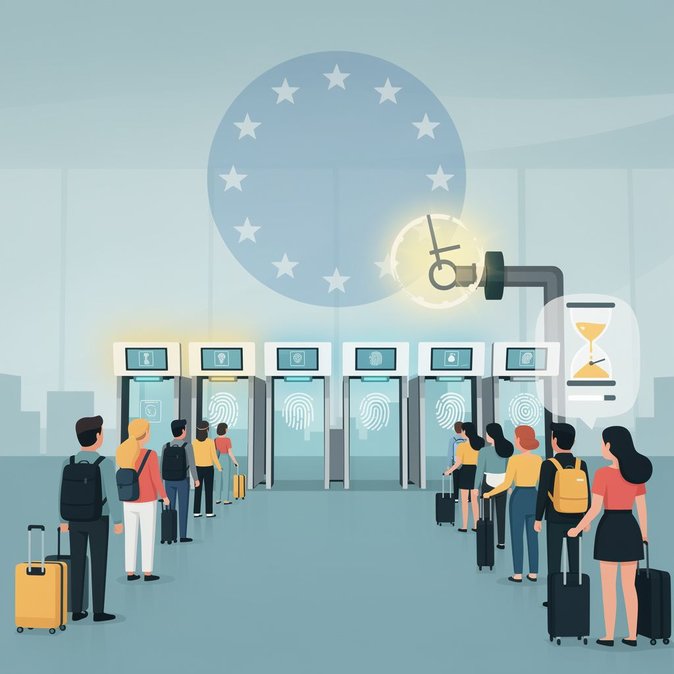
Queues of up to three hours at passport control have forced Aeroporti di Roma (ADR) – the operator of Rome-Fiumicino (FCO) and Ciampino (CIA) – to admit it may temporarily suspend the European Union’s new Entry/Exit System (EES) during the peak summer rush. In an interview published on 25 June, ADR chief executive Marco Troncone warned that the enrolment process – which captures travellers’ fingerprints and facial images – is proving “incompatible with the volumes we are going to face”, rating his concern an “eight or nine out of ten”. EES became compulsory for all non-EU short-stay travellers on 10 April 2026 after a phased rollout that started at Fiumicino and Milan-Malpensa in late-2025. While the system eliminates manual passport stamping and should tighten over-stay detection, it adds roughly 60-90 seconds per passenger at first entry. That extra processing time multiplies into bottlenecks when several wide-body arrivals land within minutes. Since late April, tour operators have reported missed rail connections and aircraft long-haul crews timing-out on duty limits because of passport-control delays. EU rules allow member states to suspend the biometric step for up to six hours at a time until 30 September if waiting times exceed 45 minutes. Troncone confirmed that ADR is studying this “safety valve” and has discussed the option with border police and the interior ministry. For now, Italy has told the European Commission it does not intend to issue a nationwide decree, so any suspension would be an airport-level decision activated when queues pass the threshold. Business-travel associations have welcomed the possibility. “A predictable 20-minute manual queue is better for duty-trip planning than a biometric line that can explode without warning,” said Federica Sanna, mobility manager at a Milan-based pharmaceutical firm, noting that missed onward connections cascade into hotel and per-diem costs. Large tour operators, meanwhile, fear reputational damage during Italy’s critical high-season. Airlines have asked ADR to give at least 24-hours’ public notice when the airport intends to revert to manual stamping so they can brief passengers. Practical tips for travellers include allowing at least four hours between long-haul arrival and onward domestic rail or regional flights, using automated passport e-gates where available for subsequent exits, and keeping boarding cards handy – officers often use them to prioritise passengers near departure cut-off. ADR has opened a real-time queue-monitor feed on its website and says additional staffing and signage will be in place from 1 July. Whether the summer of 2026 becomes the first big EES success story or its first major rollback now rests on Rome’s decision in the coming days.
Source: The Local Italy