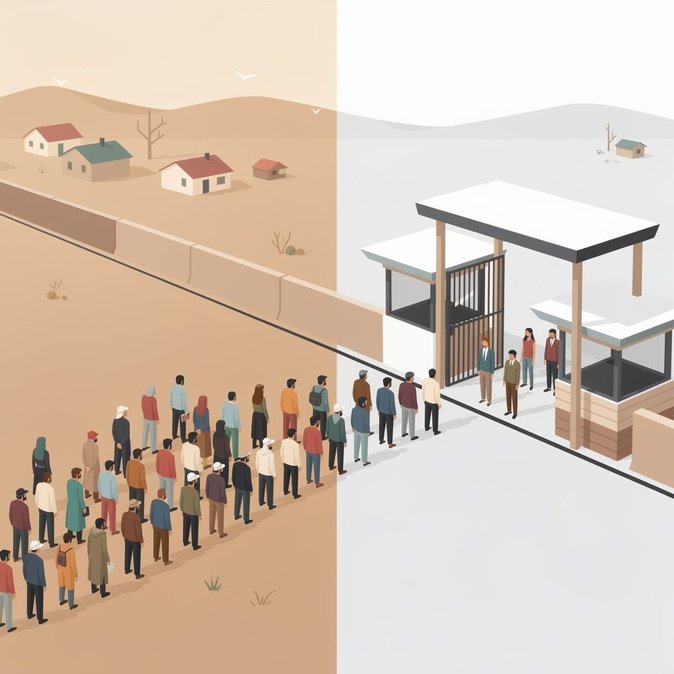
In a 6-3 decision issued on June 25, 2026, the U.S. Supreme Court ruled that people who present themselves at a port of entry on the Mexican side of the border are not yet "in" the United States and therefore cannot file an asylum application. The majority opinion, written by Justice Samuel Alito in Mullin v. Al Otro Lado, reinstates the Border Patrol practice known as “metering,” which allows officers to turn away would-be asylum seekers when staffing or facility constraints make same-day processing impossible. The ruling lifts a nationwide injunction that had blocked metering since 2021 and gives the Department of Homeland Security discretion to revive the program immediately. For corporate mobility managers, the decision could lengthen stays in Mexico for employees or contractors who plan to seek humanitarian protection in the United States, complicating duty-of-care and travel-risk planning. It may also intensify pressure on northern-Mexico logistics hubs and temporary housing markets as more migrants wait there for a processing slot. Metering originated under the Obama administration, expanded dramatically during Donald Trump’s first term, and was rescinded by President Biden. Trump’s second-term DHS argued that forcing officers to process everyone who reaches the booth would create dangerous crowding and incentivize larger flows. The Supreme Court accepted that reasoning, holding that the statute’s phrase “arrives in the United States” requires a physical crossing. Advocates warn the policy will again produce makeshift camps along the border and push desperate migrants into the desert with smugglers. Businesses with maquiladora or cross-border operations may face labor-supply upheavals, while U.S. ports of entry could see smoother throughput for legitimate trade and travel as officers regain flexibility to manage surges. Companies should brief globally mobile staff on the new legal landscape: humanitarian parole at the land border has effectively narrowed, and asylum claims must now be filed only after lawful entry or apprehension inside U.S. territory. Employers that routinely place personnel in Mexico for pre-U.S. assignments should revisit crisis-management protocols and consider providing immigration counsel earlier in the relocation process.
Source: Axios
How VisaHQ can help
VisaHQ simplifies the visa application process for individuals and businesses. Check current travel requirements, prepare the required documents and manage your application online through the VisaHQ United States of America portal.More From United States of America
View all
Supreme Court Green-Lights Border “Turnback” Policy, Allowing Agents to Block Asylum Seekers Before They Step on U.S. Soil

State Department Updates El Salvador Advisory to Level 1 but Keeps Night-Travel Ban for U.S. Staff