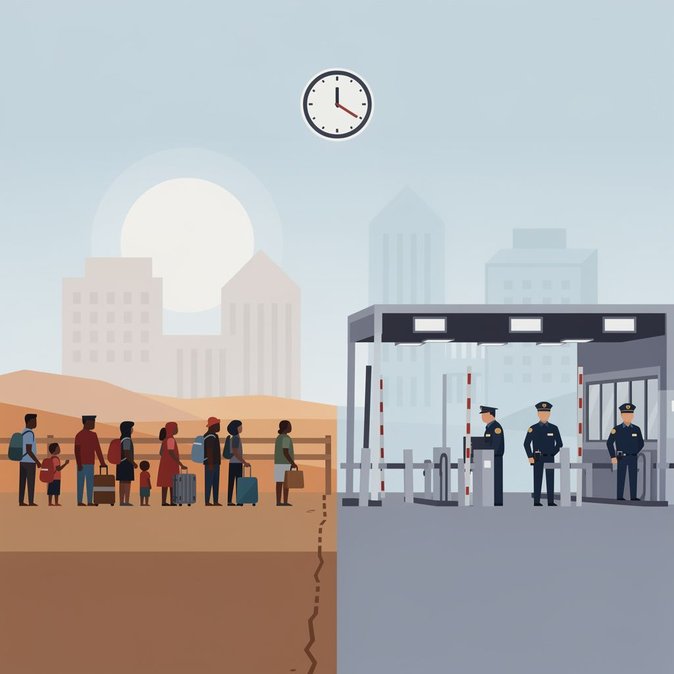
In a 6–3 decision handed down on June 25, 2026, the U.S. Supreme Court overturned a lower-court injunction that had barred Customs and Border Protection (CBP) officers from limiting the number of people permitted to request asylum at official ports of entry. The practice—known as “metering”—was first used briefly during the Obama years but became a mainstay of the Trump administration’s 2018-2021 border strategy. The high court’s ruling means CBP agents may once again refuse to process protection claims from migrants who have not yet set foot on U.S. soil, requiring would-be applicants to wait in Mexico until space becomes available. Homeland Security officials told reporters they are “reviewing operational plans” but signaled that the policy could be reinstated within days. Business travel and global mobility managers should brace for renewed congestion at northern Mexican border cities such as Tijuana, Mexicali and Ciudad Juárez. Longer wait times for commercial cargo inspection are likely if CBP diverts officers to crowd-control duties. U.S.-based companies that routinely send executives to maquiladora facilities or that move talent via the TN, L-1 or B-1 visa categories should revisit contingency plans and consider routing cross-border staff through airports rather than land crossings. From a compliance perspective, the decision underscores how quickly admissibility standards can change. Multinational employers sponsoring humanitarian parole or PERM green-card cases should expect heightened scrutiny of any time their foreign national employees spent in Mexico during the application process. Immigration counsel also predict a spike in requests for evidence (RFEs) seeking proof that applicants maintained lawful status after being refused entry under metering. Human-rights groups decried the ruling, arguing that it violates international obligations under the 1951 Refugee Convention. Conservative lawmakers applauded the decision, saying it restores “critical leverage” to manage surges. Legal observers note that the majority opinion leaves the door open for future challenges if implementation results in systematic denials rather than orderly queues. For now, however, employers with cross-border operations must assume that same-day asylum filings at land ports will be the exception, not the rule.
Source: Associated Press