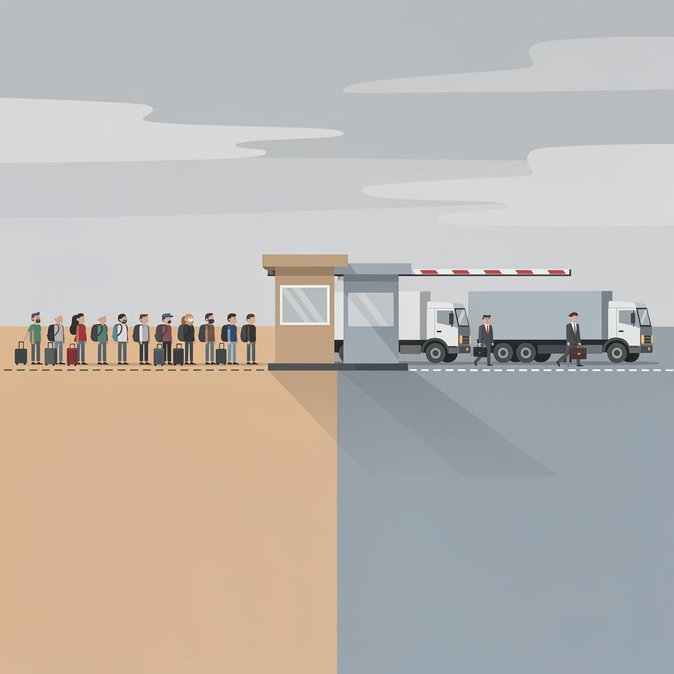
Just minutes after its asylum ruling, the Supreme Court issued a second blockbuster immigration decision on June 25, 2026, holding that courts lack authority to review a DHS decision to terminate Temporary Protected Status (TPS) for nationals of Haiti and Syria. Writing again for the 6-3 majority, Justice Alito said Congress made TPS a fully discretionary tool that can be ended whenever the Secretary of Homeland Security deems country conditions sufficiently improved. Roughly 480,000 Haitians and 180,000 Syrians currently live and work in the United States under TPS, many employed in hospitality, healthcare and construction. Unless the administration grants a wind-down period or Congress legislates a fix, their employment authorization will expire 180 days after DHS publishes a notice in the Federal Register. For companies, that means large-scale reverification of I-9 work authorization, possible furloughs, and urgent exploration of alternative visa categories (for example, H-2B, EB-3, or asylum referrals). The ruling reverses lower-court injunctions that had kept TPS in place since 2018 litigation began. DHS officials said they would “begin an orderly transition” but offered no timeline. Advocacy groups vowed renewed pressure on Capitol Hill for a targeted legalization bill. Mobility programs should identify employees and dependents holding Haitian- or Syrian-based TPS, assess project impacts, and budget for premium-processing costs if alternate filings prove necessary. They should also prepare communications plans: some workers may lose driver’s-license validity tied to their employment authorization, affecting commuting and travel. Finally, the decision underscores a broader trend: the Supreme Court is deferring to executive-branch immigration discretion, injecting more volatility into workforce planning. Global employers may need to develop faster scenario-modeling capabilities to respond to abrupt status changes for large talent cohorts.
Source: Associated Press
How VisaHQ can help
VisaHQ simplifies the visa application process for individuals and businesses. Check current travel requirements, prepare the required documents and manage your application online through the VisaHQ United States of America portal.More From United States of America
View all
Supreme Court Green-Lights Border “Turnback” Policy, Allowing Agents to Block Asylum Seekers Before They Step on U.S. Soil

State Department Updates El Salvador Advisory to Level 1 but Keeps Night-Travel Ban for U.S. Staff