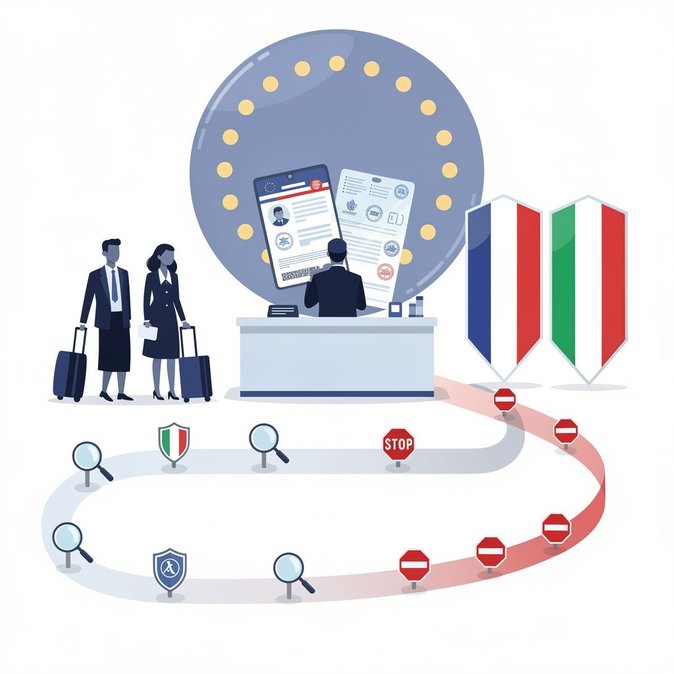
At a meeting of EU ambassadors in Brussels on 26 June 2026, France joined Italy in refusing to back a proposal that would have barred all current and former Russian combatants from entering the Schengen area. The measure—championed by eleven northern- and eastern-European member states—sought to add questions on military service to the EU’s common visa application form and allow automatic refusal when an applicant had served in the Russian armed forces after February 2022. Paris argues that blanket exclusions based on past military service breach EU fundamental-rights rules and could open the door to mass litigation in French administrative courts. The French Foreign Ministry instead favours individual security screenings through existing databases such as the Schengen Information System (SIS) and the new Entry/Exit System (EES). Officials also warn that the ban might jeopardise fragile diplomatic channels that Paris maintains with Moscow on humanitarian issues—including prisoner exchanges and cultural-heritage cooperation. Business groups welcomed France’s stance. The French-Russian Chamber of Commerce noted that more than 400 French companies still operate in Russia under wind-down or stand-still agreements and rely on limited staff mobility in both directions for compliance work, audits and arbitration hearings. A categorical ban would, they say, have complicated exit strategies and raised legal-security risks for corporate executives holding dual passports. The Commission is expected to rewrite the text in the coming weeks, but unanimity in the Council will still be required. For the moment, Russian nationals who have completed compulsory military service can continue to apply for French short-stay visas, although consulates will keep enhanced scrutiny procedures introduced in 2022. Companies planning travel for Russian-based staff should be prepared for longer processing times and possible requests for additional documentation on the applicant’s employment history.
Source: Euronews