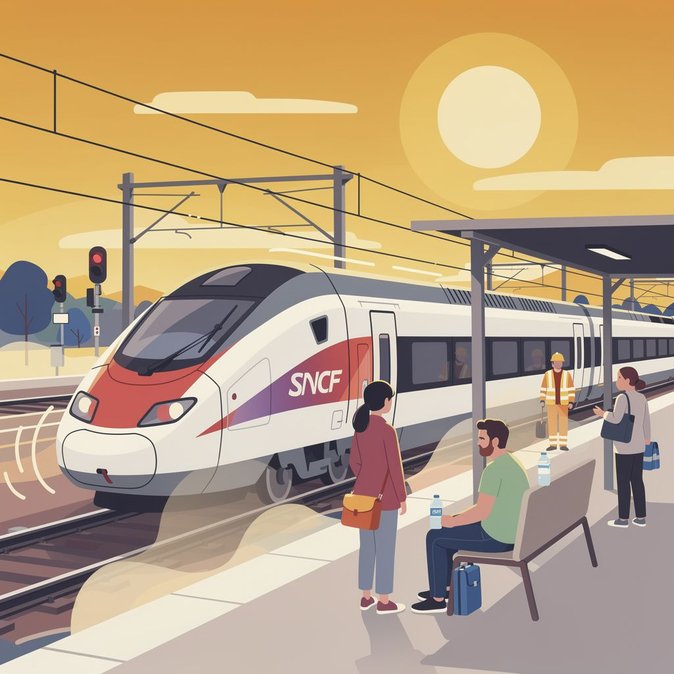
In a blog post on 26 June, SNCF Voyageurs outlined how the Paris RER D line—the second-busiest commuter corridor in Europe—is coping with the historic heatwave. Track temperatures hit 60 °C near Malesherbes on 25 June, triggering automatic speed caps and selective service cuts to protect infrastructure. SNCF Réseau teams are now patrolling critical sections 24/7 with thermal cameras, while technicentres give priority to older Z2N trainsets whose air-conditioning is prone to failure. Stations such as Corbeil-Essonnes and Villeneuve-Saint-Georges have set up hydration points, and staff distributed thousands of water bottles during the evening rush. The operator advises commuters—and by extension corporate travel planners—to avoid journeys in the hottest part of the day or to opt for telework where possible. Travellers can use the Transilien, SNCF Connect or Île-de-France Mobilités apps to locate air-conditioned carriages and receive push alerts on last-minute cancellations. Although the contingency plan is focused on a regional service, the practices—rail-temperature monitoring and mobile hydration units—are likely to be replicated across France’s intercity network as heatwaves become more frequent. Employers should incorporate similar advice into duty-of-care briefings for visiting staff and expatriates.
Source: Transilien RER D official blog