
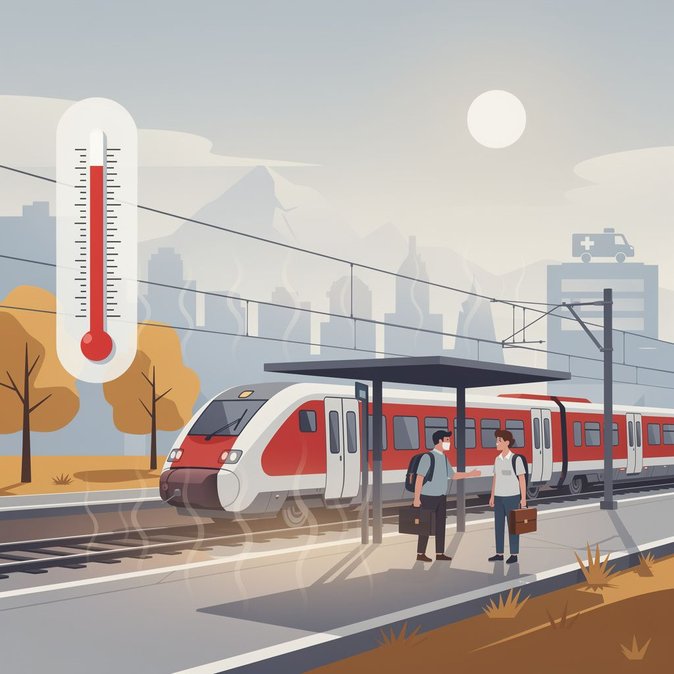
An Associated Press roundup of the pan-European heatwave reports that temperatures in Basel climbed to 38.8 °C on Saturday, 27 June, while Denmark (37 °C) and the Czech Republic (40.6 °C) also smashed national June records. Deutsche Bahn and partner railways—including SBB Cargo—issued rare weekend advisories urging passengers to defer all but essential journeys. Swiss impacts came swiftly. The north-south Gotthard axis experienced multiple track-circuit failures, requiring a 30-minute total closure during the Saturday afternoon peak. Emergency services in Basel counted 43 heat-related incidents around the SBB station, mostly international travellers queuing for delayed ICE and TGV services without shade.
For those stranded passengers, having flexible documentation support can be just as critical as a contingency ticket. VisaHQ’s online platform (https://www.visahq.com/switzerland/) lets travellers and mobility teams verify entry rules in seconds, obtain express visas, and receive real-time embassy updates—tools that streamline rerouting decisions when extreme weather forces last-minute itinerary changes.
Road freight and relocation shipments were also disrupted: Germany’s A2 Autobahn buckled outside Berlin, prompting Swiss hauliers to re-route via Austria, adding six hours to Zurich–Hamburg removal consignments. The episode underscores the growing intersection between climate events and cross-border mobility planning. Mobility managers are being encouraged to integrate climatic trigger points—heat, flood, wildfire—into travel-approval workflows and supplier SLAs, mirroring the pandemic-era approach to health alerts. Swiss insurers (Helvetia, AXA) estimate that each degree above 35 °C raises transport-infrastructure claims by 6–7 %, a trend likely to feed through to higher policy premiums for travel-risk cover in 2027.
For those stranded passengers, having flexible documentation support can be just as critical as a contingency ticket. VisaHQ’s online platform (https://www.visahq.com/switzerland/) lets travellers and mobility teams verify entry rules in seconds, obtain express visas, and receive real-time embassy updates—tools that streamline rerouting decisions when extreme weather forces last-minute itinerary changes.
Road freight and relocation shipments were also disrupted: Germany’s A2 Autobahn buckled outside Berlin, prompting Swiss hauliers to re-route via Austria, adding six hours to Zurich–Hamburg removal consignments. The episode underscores the growing intersection between climate events and cross-border mobility planning. Mobility managers are being encouraged to integrate climatic trigger points—heat, flood, wildfire—into travel-approval workflows and supplier SLAs, mirroring the pandemic-era approach to health alerts. Swiss insurers (Helvetia, AXA) estimate that each degree above 35 °C raises transport-infrastructure claims by 6–7 %, a trend likely to feed through to higher policy premiums for travel-risk cover in 2027.