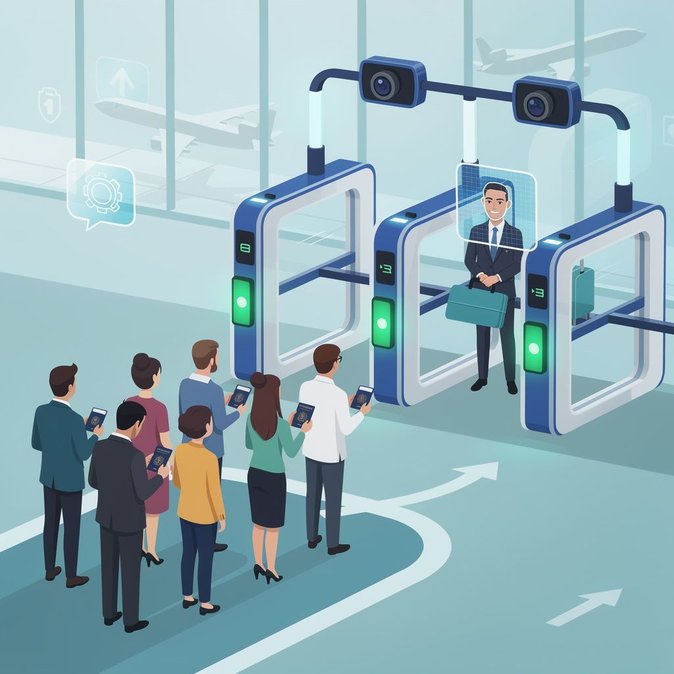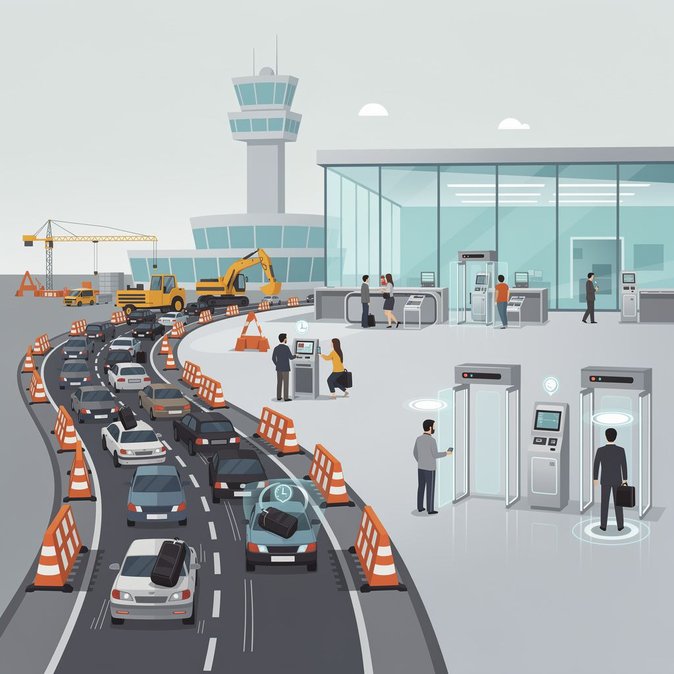
Travellers flying out of Václav Havel Airport Prague (PRG) this summer face a paradox: once inside the terminals, processing is faster than ever thanks to new CT-X security scanners, 24 self-bag-drop stations and a chatbot named AVA; yet getting to the terminal may take longer because of a €65 million overhaul of the D7/Pražský okruh interchange at the airport entrance. In an interview published at 06:00 on 27 June, board member Martin Kučera warned passengers to add at least 30 minutes to the usual journey time and to consider the city’s metro-plus-bus connection during peak hours. Long queues of cars have already formed at the construction pinch-point, and airlines will not delay departures for late arrivals, he stressed. Inside the building Prague is showcasing the next generation of passenger-handling. CT-X scanners in Terminal 2 allow liquids and laptops to stay in bags, cutting average security wait times to under ten minutes 98 % of the day. Biometric e-gates tied to the EU Entry/Exit System (EES) are now standard for non-EU arrivals, while AVA, an AI assistant accessible via the airport’s website and WhatsApp, has answered over 70 000 queries since April—from terminal identification to oversized-baggage rules. The airport expects a record 18.3 million passengers in 2026 and says digital self-service is the only way to cope without major terminal expansion. Corporate travel managers are advised to brief assignees on the roadworks, encourage online parking reservations and promote use of AVA to pre-clear baggage questions that could otherwise delay check-in. Kučera also confirmed that negotiations with Czech Railways on a dedicated airport rail link have entered the final feasibility phase, but the earliest start date remains 2030. Until then, a mix of improved bus lanes and smarter terminal tech will have to absorb both leisure and business growth.
Source: E15.cz