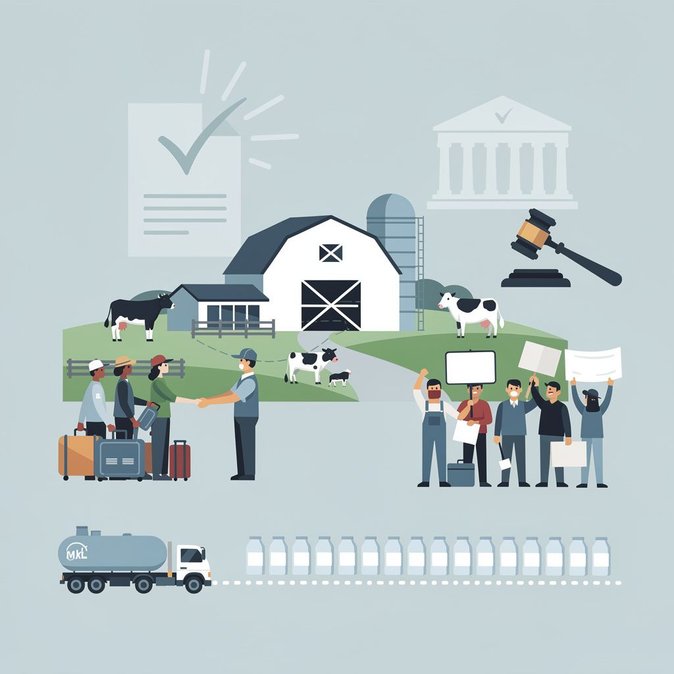
In an unexpected policy shift disclosed in an agency memo on June 27, the Trump administration extended eligibility for the H-2A agricultural guest-worker visa to the dairy industry. Dairy farms, which operate year-round, were previously excluded because H-2A was reserved for seasonal labor. The move follows intense lobbying by Dairy Farmers of America, Land O’Lakes and other cooperatives that warned of chronic labor shortages and soaring wage bills. The Washington Post reports that the White House had planned a public rollout during a presidential visit to Wisconsin earlier in the month but shelved the announcement to avoid backlash from immigration hard-liners. Instead, U.S. Citizenship and Immigration Services (USCIS) issued guidance late Friday that takes effect immediately. For dairy producers, the change provides a legal pipeline to recruit workers for positions that U.S. jobseekers rarely fill. According to Labor Department data cited in the article, H-2A approvals hit 398,000 in FY 2025—a 45 percent increase in five years—but none went to dairy operations. Industry analysts say opening the program could stabilize output and prices at a time of volatile feed and energy costs. Restrictionist groups reacted harshly. The Immigration Accountability Project warned that year-round visas violate H-2A’s statutory requirement for “temporary or seasonal” work and predicted lawsuits. Union advocates argued the policy would depress rural wages and weaken bargaining power for U.S. farmworkers. HR teams at dairy companies must now build compliance infrastructure—housing inspections, wage guarantees and mandatory outbound travel—virtually from scratch. Experts recommend engaging immigration counsel early and setting up auditing systems identical to those used by fruit-and-vegetable growers. Multinationals that source dairy inputs should monitor for potential supply disruptions if litigation stalls the program.
Source: The Washington Post