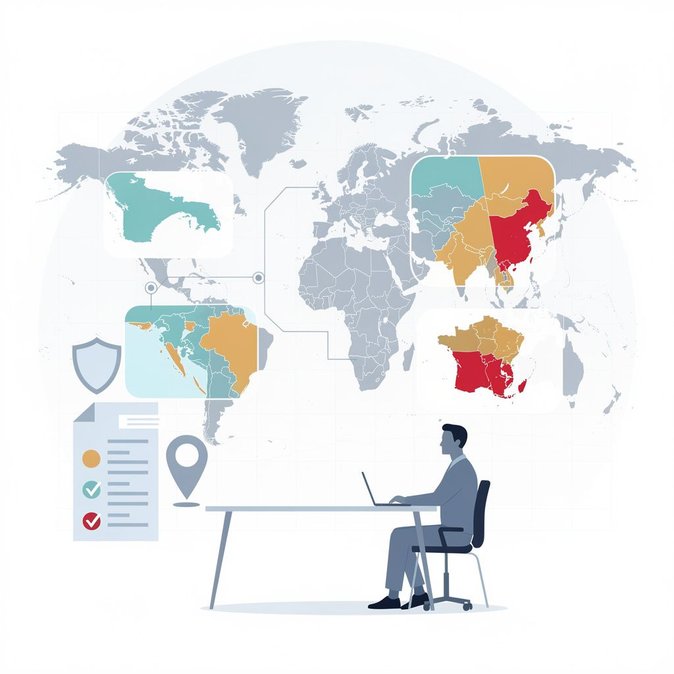
Late Saturday the U.S. State Department quietly pushed live a redesigned, region-specific travel-advisory platform that assigns different warning levels within the same country. The first roll-out increases alert levels for Mexico’s Baja California Sur, Jamaica’s St. James Parish, France’s Seine-Saint-Denis suburb and the Bahamas’ New Providence Island, citing a mix of violent crime, crowding and event-related disruptions. Unlike the previous country-wide system, the new maps break destinations into municipalities, allowing business travelers to see “Level 3: Reconsider Travel” advisories next to “Level 2: Exercise Increased Caution” zones only a few miles away.
VisaHQ’s digital visa and passport service can help organizations keep pace with these newly granular advisories by automatically cross-referencing destination-level warnings with real-time entry-document requirements and security forms; travel managers can generate compliance reports in minutes or direct employees to the self-service portal—learn more at https://www.visahq.com/united-states/
The granular approach mirrors corporate duty-of-care risk assessments and is welcomed by many travel-risk vendors, but it also complicates itinerary planning because airlines, hotels and ground-transport providers rarely align their operations with micro-level boundaries. For mobility teams relocating U.S. staff to Mexican near-shore tech hubs such as Los Cabos or to France for the Summer Olympic overlay projects, the update may trigger immediate policy reviews. Some insurance carriers automatically void coverage for employees who enter Level 3 areas without prior approval, and several multinationals already require C-suite sign-off for assignments in regions above Level 2. The release coincides with a broader State Department push to synchronize its advisories with DHS’s intelligence-fusion centers ahead of the July 4 holiday and the FIFA World Cup knockout rounds. Officials say additional country break-outs will follow over the next six weeks, starting with Brazil, India and the United Kingdom. Travel managers should therefore plan to refresh their risk-classification tables frequently throughout the summer peak. Employees can access the color-coded maps via the updated Smart Traveler Enrollment Program (STEP) mobile app, which now sends push notifications if a traveler’s GPS signal enters a higher-risk zone.
VisaHQ’s digital visa and passport service can help organizations keep pace with these newly granular advisories by automatically cross-referencing destination-level warnings with real-time entry-document requirements and security forms; travel managers can generate compliance reports in minutes or direct employees to the self-service portal—learn more at https://www.visahq.com/united-states/
The granular approach mirrors corporate duty-of-care risk assessments and is welcomed by many travel-risk vendors, but it also complicates itinerary planning because airlines, hotels and ground-transport providers rarely align their operations with micro-level boundaries. For mobility teams relocating U.S. staff to Mexican near-shore tech hubs such as Los Cabos or to France for the Summer Olympic overlay projects, the update may trigger immediate policy reviews. Some insurance carriers automatically void coverage for employees who enter Level 3 areas without prior approval, and several multinationals already require C-suite sign-off for assignments in regions above Level 2. The release coincides with a broader State Department push to synchronize its advisories with DHS’s intelligence-fusion centers ahead of the July 4 holiday and the FIFA World Cup knockout rounds. Officials say additional country break-outs will follow over the next six weeks, starting with Brazil, India and the United Kingdom. Travel managers should therefore plan to refresh their risk-classification tables frequently throughout the summer peak. Employees can access the color-coded maps via the updated Smart Traveler Enrollment Program (STEP) mobile app, which now sends push notifications if a traveler’s GPS signal enters a higher-risk zone.