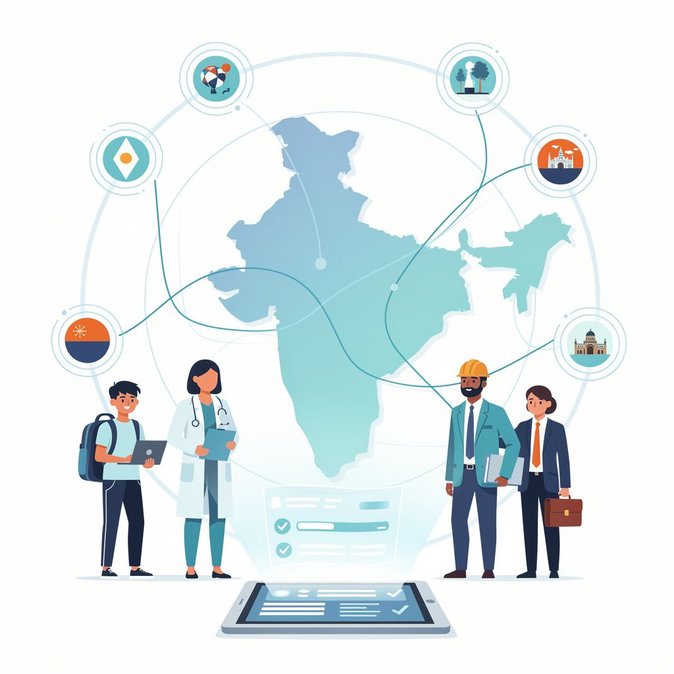
External Affairs Minister S. Jaishankar told the inaugural Human Resource Mobility Forum in New Delhi that India has concluded 28 Migration and Mobility Partnership Agreements (MMPAs) with 26 countries, with “several more in the pipeline.” The MMPAs create legal channels for Indian students, professionals and blue-collar workers while obliging partner governments to crack down on illegal recruitment and human trafficking. Countries covered include Germany, France, Japan, Portugal and the UAE, according to ministry officials.
Whether you’re an Indian student eyeing a research stint in France or a Gulf employer looking to onboard technicians from Telangana, specialist visa service platforms such as VisaHQ can streamline the paperwork. Through its India portal (https://www.visahq.com/india/), VisaHQ offers up-to-date guidance on document requirements, appointment scheduling and courier logistics, helping applicants tap into the new MMPA channels quickly and compliantly.
Each pact sits on a common digital backbone—India’s e-Migrate system—that has issued five million clearances since 2015. Jaishankar said trusted mobility pathways are now a pillar of India’s foreign relations, linking demographics with labour-short markets overseas. For employers the immediate effect is faster skills-visa processing and portability of social-security contributions under bilateral totalisation clauses. He also highlighted upcoming modules in e-Migrate that will allow foreign employers to verify Indian qualifications and conduct video interviews, reducing reliance on labour brokers. Stakeholders welcomed the announcements but urged the ministry to publish country-wise quotas and wage floors so that corporate planning can begin. Labour-sending states such as Kerala and Telangana have already offered to open facilitation centres, signalling that sub-national actors will play a larger role in India’s migration diplomacy.
Whether you’re an Indian student eyeing a research stint in France or a Gulf employer looking to onboard technicians from Telangana, specialist visa service platforms such as VisaHQ can streamline the paperwork. Through its India portal (https://www.visahq.com/india/), VisaHQ offers up-to-date guidance on document requirements, appointment scheduling and courier logistics, helping applicants tap into the new MMPA channels quickly and compliantly.
Each pact sits on a common digital backbone—India’s e-Migrate system—that has issued five million clearances since 2015. Jaishankar said trusted mobility pathways are now a pillar of India’s foreign relations, linking demographics with labour-short markets overseas. For employers the immediate effect is faster skills-visa processing and portability of social-security contributions under bilateral totalisation clauses. He also highlighted upcoming modules in e-Migrate that will allow foreign employers to verify Indian qualifications and conduct video interviews, reducing reliance on labour brokers. Stakeholders welcomed the announcements but urged the ministry to publish country-wise quotas and wage floors so that corporate planning can begin. Labour-sending states such as Kerala and Telangana have already offered to open facilitation centres, signalling that sub-national actors will play a larger role in India’s migration diplomacy.