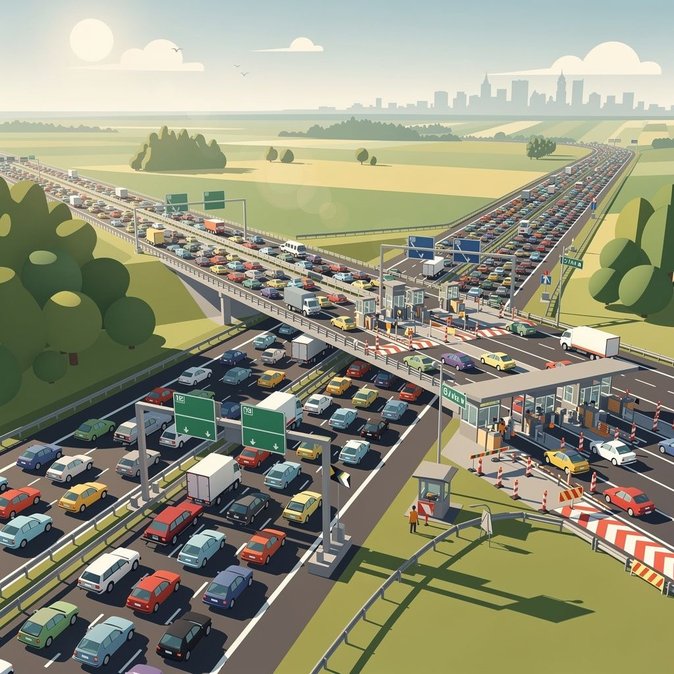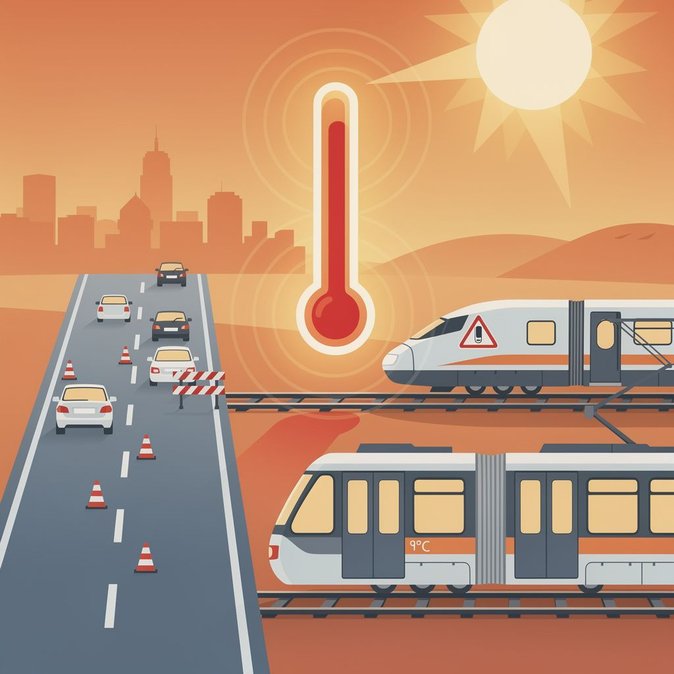
Germany’s record‐breaking heatwave culminated yesterday with the DWD weather service confirming a provisional 41.7 °C reading in Brandenburg— the highest June temperature since records began. The extreme heat buckled asphalt on key stretches of the A2 motorway and melted tram-track bedding in Leipzig, forcing operators to suspend services. Deutsche Bahn imposed temporary slow-downs on several ICE lines where rail temperatures exceeded safety limits, extending journey times by up to 50 minutes. Infrastructure stress was most acute in Saxony-Anhalt and Brandenburg, where emergency crews spread quartz sand on blistered surfaces to restore grip. In Berlin, BVG diverted three tram routes after overhead-line sag hit the mandatory clearance envelope. Freight companies rerouted time-critical loads via cooler overnight slots, warning clients of possible delivery backlogs. The German Medical Association renewed its call for mandatory “heat action plans” covering hospitals, care homes and public transport hubs after the Marburg Association reported that only one-third of in-patient wards have air-conditioned rooms. Similar appeals came from the VDV transport association, which wants federal funds to retrofit track beds and catenary systems against thermal expansion. For mobility managers the immediate impact is contingency planning. Companies running commuter shuttles on affected corridors should monitor regional authority feeds for speed restrictions and potential closures. Road toll operator Toll Collect has already flagged that heavy-goods vehicles may face ad-hoc detours if surface temperatures rise again this week. Longer term, yesterday’s disruption is a stark reminder that climate adaptation is now a core part of travel‐risk management. The Federal Transport Ministry is drafting revised design standards for asphalt mixes and bridge expansion joints, but these will take years to feed into upgrades. Until then, expect more “slow orders” and pop-up closures whenever the mercury climbs above 38 °C.
Source: Euronews