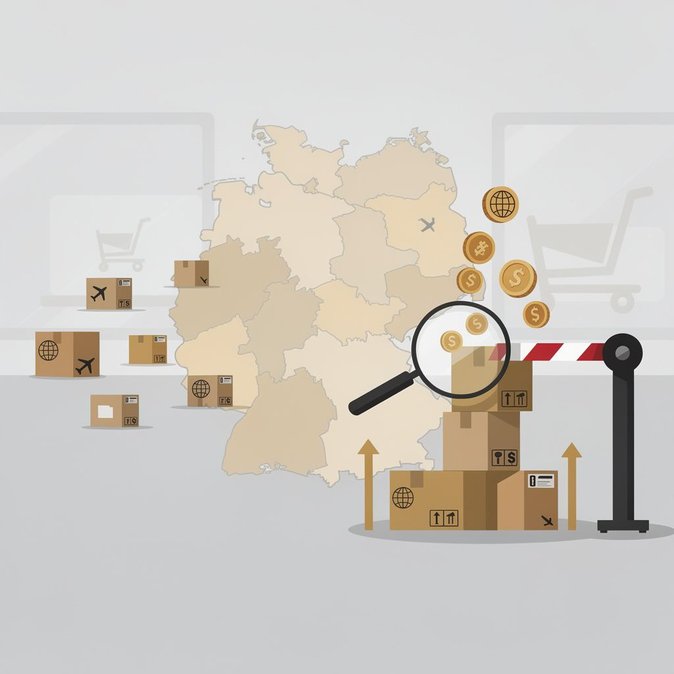
As of 1 July, Germany has scrapped the long-standing duty-free threshold for goods valued under €150 arriving from non-EU countries. The change implements an EU regulation intended to curb under-valuation fraud and level the playing field for domestic retailers facing competition from ultra-low-cost e-commerce platforms in Asia.
![€150 De-Minimis Customs Exemption Abolished for Non-EU Imports]()
For companies and individuals who must juggle shipping compliance and cross-border travel, VisaHQ can at least take the visa paperwork off the to-do list. Through its Germany portal (https://www.visahq.com/germany/), the service provides quick online applications, real-time status tracking, and expert guidance—helping mobility teams and travelers stay compliant on entry requirements while they adjust to the new customs landscape.
Consumers who order small electronics or fast-fashion items from outside the bloc must now pay the full customs duty and import VAT regardless of parcel value. German Customs (Zoll) warns that parcels declared before 1 July but arriving after that date will not be grandfathered, potentially surprising shoppers with unexpected fees at the post office. For mobility professionals the relevance lies in employee relocation and global mobility allowances. HR departments often reimburse assignees for initial household-goods purchases shipped from home countries; those cost projections must now factor in duties on every item, not just higher-value shipments. Employers may also see a rise in ‘surprise-fee’ queries on corporate credit cards used for small overseas orders. Logistics providers are bracing for longer clearance times as declaration volumes spike. DHL and UPS have rolled out upgraded APIs to capture mandatory HS codes and value data at checkout, urging marketplaces to integrate quickly to avoid backlogs at German entry hubs in Frankfurt, Leipzig and Cologne. The Finance Ministry expects the measure to generate up to €400 million annually and reduce packaging waste by discouraging micro-orders. Nonetheless, SMEs that import prototype parts and low-volume samples argue the rule will raise innovation costs. The government has promised a review in mid-2027 once the EU-wide impact is clearer.
For companies and individuals who must juggle shipping compliance and cross-border travel, VisaHQ can at least take the visa paperwork off the to-do list. Through its Germany portal (https://www.visahq.com/germany/), the service provides quick online applications, real-time status tracking, and expert guidance—helping mobility teams and travelers stay compliant on entry requirements while they adjust to the new customs landscape.
Consumers who order small electronics or fast-fashion items from outside the bloc must now pay the full customs duty and import VAT regardless of parcel value. German Customs (Zoll) warns that parcels declared before 1 July but arriving after that date will not be grandfathered, potentially surprising shoppers with unexpected fees at the post office. For mobility professionals the relevance lies in employee relocation and global mobility allowances. HR departments often reimburse assignees for initial household-goods purchases shipped from home countries; those cost projections must now factor in duties on every item, not just higher-value shipments. Employers may also see a rise in ‘surprise-fee’ queries on corporate credit cards used for small overseas orders. Logistics providers are bracing for longer clearance times as declaration volumes spike. DHL and UPS have rolled out upgraded APIs to capture mandatory HS codes and value data at checkout, urging marketplaces to integrate quickly to avoid backlogs at German entry hubs in Frankfurt, Leipzig and Cologne. The Finance Ministry expects the measure to generate up to €400 million annually and reduce packaging waste by discouraging micro-orders. Nonetheless, SMEs that import prototype parts and low-volume samples argue the rule will raise innovation costs. The government has promised a review in mid-2027 once the EU-wide impact is clearer.