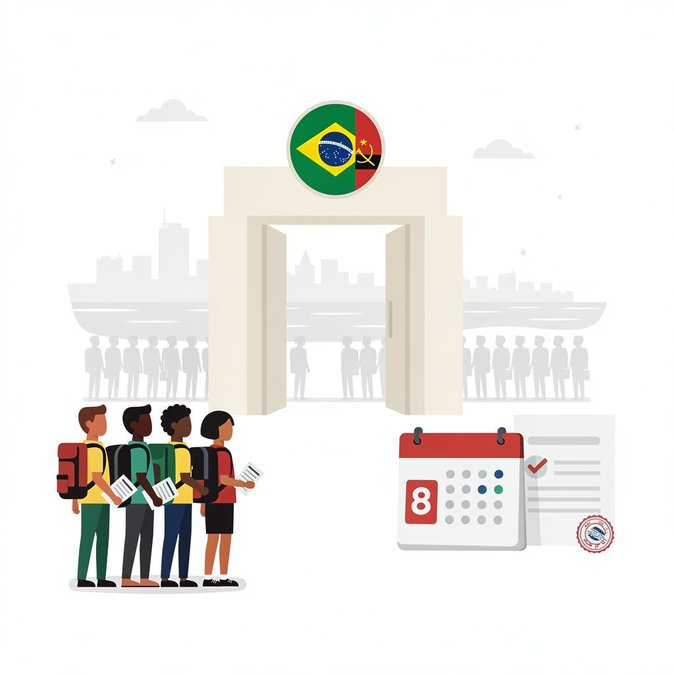
The Brazilian Ministry of Justice and Public Security (MJSP) used the closing hours of Friday, 3 July 2026, to publish the country’s first-ever National Plan for Migration, Refugee and Statelessness (I PlaNaMigra). The four-year blueprint translates the broad principles of Brazil’s 2025 National Migration Policy (PNMRA) into 62 concrete actions, complete with measurable indicators and an online Business-Intelligence dashboard that will allow the public, civil society and other government agencies to monitor progress in real time.
Professionals tasked with securing visas or residence permits under these new benchmarks can simplify the process through VisaHQ. The platform’s Brazil page consolidates the latest forms, fee schedules and processing updates, and its concierge team can shepherd applications through the emerging BI-enabled workflow—providing the kind of predictability that I PlaNaMigra promises but has yet to fully deliver.
Drafted through a year-long process that combined six technical workshops across five regions, input from ten federal ministries and more than 430 public comments collected on the Brasil Participativo platform, the plan sets out cross-cutting goals ranging from faster digital visa adjudication to expanded language training and labour-market integration for newcomers. It also earmarks resources for state and municipal governments that agree to pilot “One-Stop Mobility Desks” in major economic corridors such as the São Paulo–Campinas innovation axis and the Manaus Free-Trade Zone. Corporate mobility managers will find practical timelines: by March 2027, MJSP pledges that 90 % of residence-permit renewals will be processed within 30 days, down from the current 67-day average; by September 2028 the new BI portal will publish anonymised data on pass-through visa refusals so companies can spot systemic documentation gaps. The plan also mandates a quarterly public hearing with business associations, chambers of commerce and migrant-community NGOs—an unprecedented dialogue channel that could influence future work-permit quotas and digital-nomad thresholds. For multinational employers, the headline is predictability: Brazil has long had progressive legislation but uneven implementation. I PlaNaMigra’s KPI-driven architecture, backed by an inter-ministerial steering committee chaired by the Justice Minister, signals that Brasília is shifting from ad-hoc circulars to a programmatic, data-driven model. Companies that move staff or hire remote talent in Brazil should map upcoming pilots—especially the promised e-payment integration with PIX for government fees—and adjust compliance calendars accordingly.
Professionals tasked with securing visas or residence permits under these new benchmarks can simplify the process through VisaHQ. The platform’s Brazil page consolidates the latest forms, fee schedules and processing updates, and its concierge team can shepherd applications through the emerging BI-enabled workflow—providing the kind of predictability that I PlaNaMigra promises but has yet to fully deliver.
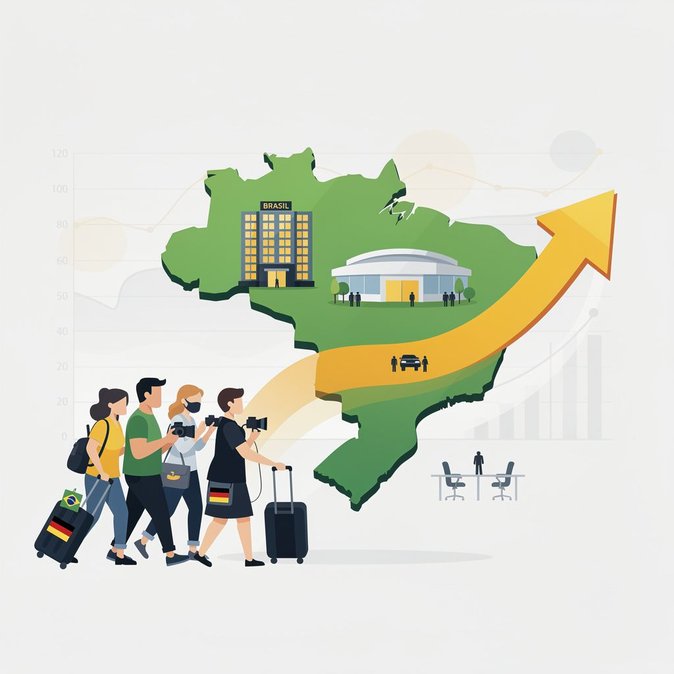
Drafted through a year-long process that combined six technical workshops across five regions, input from ten federal ministries and more than 430 public comments collected on the Brasil Participativo platform, the plan sets out cross-cutting goals ranging from faster digital visa adjudication to expanded language training and labour-market integration for newcomers. It also earmarks resources for state and municipal governments that agree to pilot “One-Stop Mobility Desks” in major economic corridors such as the São Paulo–Campinas innovation axis and the Manaus Free-Trade Zone. Corporate mobility managers will find practical timelines: by March 2027, MJSP pledges that 90 % of residence-permit renewals will be processed within 30 days, down from the current 67-day average; by September 2028 the new BI portal will publish anonymised data on pass-through visa refusals so companies can spot systemic documentation gaps. The plan also mandates a quarterly public hearing with business associations, chambers of commerce and migrant-community NGOs—an unprecedented dialogue channel that could influence future work-permit quotas and digital-nomad thresholds. For multinational employers, the headline is predictability: Brazil has long had progressive legislation but uneven implementation. I PlaNaMigra’s KPI-driven architecture, backed by an inter-ministerial steering committee chaired by the Justice Minister, signals that Brasília is shifting from ad-hoc circulars to a programmatic, data-driven model. Companies that move staff or hire remote talent in Brazil should map upcoming pilots—especially the promised e-payment integration with PIX for government fees—and adjust compliance calendars accordingly.