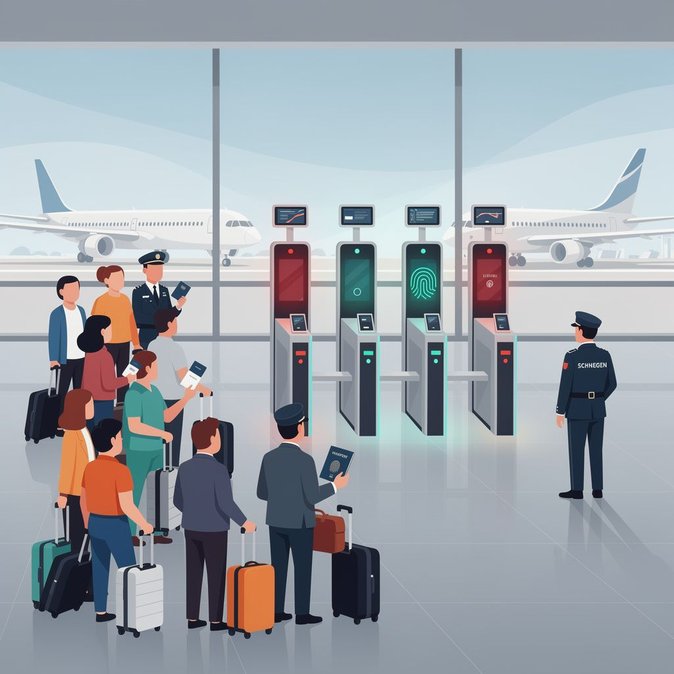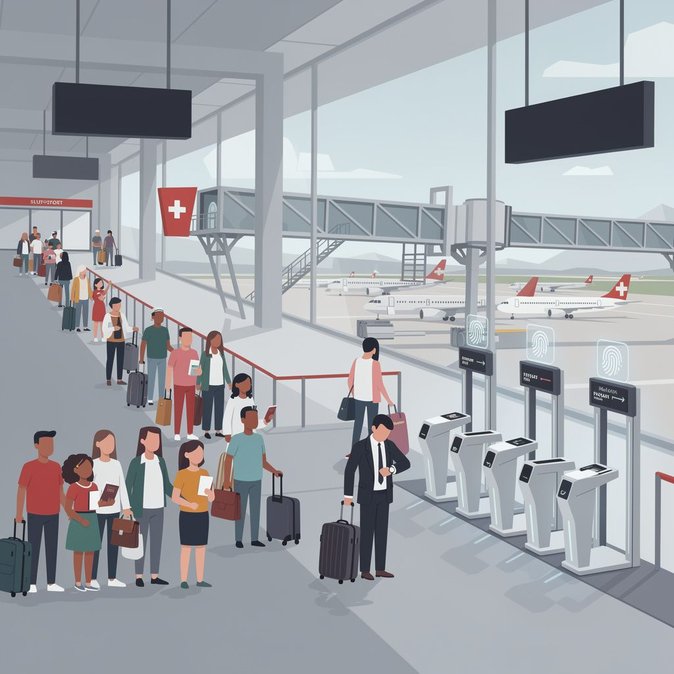
Officials from Switzerland joined counterparts from EU member states, Norway, Iceland and Liechtenstein in Brussels on 3 July for the latest meeting of the Council of the EU’s Working Party for Schengen Matters. The closed-door session, held in room 35.4 of the Justus Lipsius building, was the first since the Entry/Exit System went live at most external air-borders and focused on operational teething problems as well as the timetable for the ETIAS pre-travel authorisation. According to the published agenda, delegations exchanged statistics on processing times, equipment failures and passenger-throughput ratios. Swiss representatives argued for a “light-touch” phase-in at land borders to avoid peak-hour tailbacks at Basel-Weil-am-Rhein and the Bardonnex crossing near Geneva, which handle thousands of daily commuters. They also reiterated calls for a transit lane for ‘trusted shuttle’ buses that link EuroAirport and downtown Basel without entering French territory. Member states broadly supported Switzerland’s plea for flexibility, with France noting similar commuter issues around Strasbourg-Kehl and the Øresund link affecting Denmark and Sweden. The Commission, however, warned that any derogations must be time-limited to preserve the integrity of Schengen-wide data. Officials confirmed that ETIAS is still pencilled in for “Q4 2026”, but several delegations requested a gap of at least six months after full EES stabilisation. For multinationals the outcome signals potential relief on border-crossing bottlenecks that have disrupted Franco-Swiss shuttle services and just-in-time supply chains. Mobility managers should nevertheless expect continued patchiness over the summer and monitor bilateral announcements that may stem from the meeting. The Working Party will reconvene in October to review summer data; any formal legal tweaks would then progress to COREPER and the Justice and Home Affairs Council. Industry associations such as SwissHoldings and the European Travel Commission, which fed anonymised queue-metrics into the discussion, welcomed the pragmatic tone but urged Brussels to publish a consolidated implementation calendar so that airlines and rail operators can plan check-in and staffing models with at least three months’ notice.