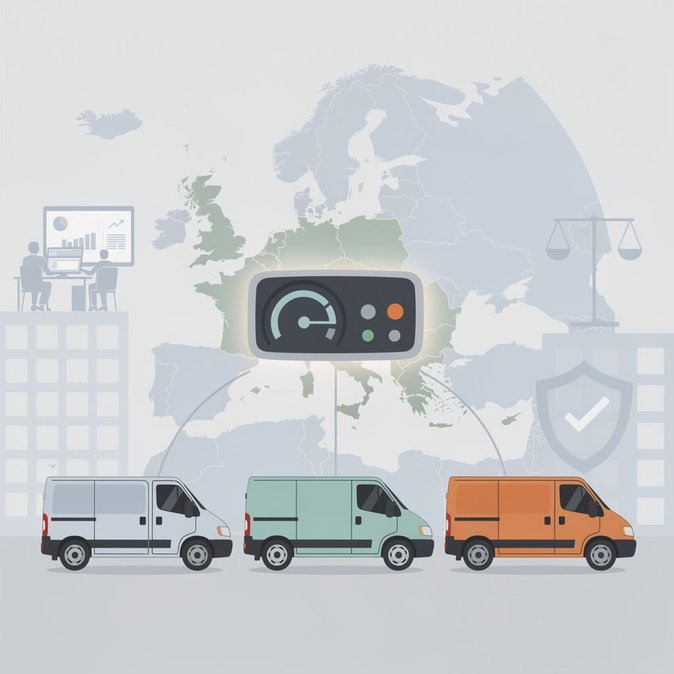
On 3 July 2026 the training consortium Formatras published a 14-page briefing that translates the complex EU “Mobility Package I” rules, in force since 1 July, into practical instructions for Italian fleet operators and logistics managers. The note – based on a circular of the Ministry of Infrastructure and Transport (MIT) dated 16 April 2026 – confirms that vans and other light commercial vehicles (LCVs) between 2.5 t and 3.5 t engaged in international haulage or cabotage must now be equipped with the second-generation smart tachograph (G2 V2). The device automatically logs border crossings, geo-positions the vehicle every three hours and transmits data to enforcement officers, closing a long-standing compliance gap between heavy trucks and lighter vans. Formatras details which journeys fall inside or outside the new scope, how mixed domestic/international operations should use the “out-of-scope” mode and which driver cards and data-archiving procedures satisfy inspectors. It highlights that companies running Italian-registered fleets on “milk-run” routes between Italy and neighbouring EU markets will have to reorganise schedules, train drivers and budget up to €1 200 per vehicle for hardware plus back-office software integration. Failure to install the device is now punishable under article 179 of the Italian Highway Code with fines up to €8 658 and licence suspension, as Bari municipal police demonstrated during the first weekend of roadside checks. The guidance also clarifies grey areas: self-haulage by manufacturers remains exempt only when driving is not the driver’s main task; purely national routes stay out of scope; and vehicles must carry evidence of transport purpose to justify exemption claims. Transport associations such as Confartigianato Trasporti welcomed the clarity but urged the government to offer transition vouchers for small operators. Insurance brokers have already begun marketing “tachograph compliance” products covering data-breach penalties. For multinationals that use Italian subsidiaries to deliver across Southern Europe, the note removes ambiguity and allows compliance programmes to move from “wait-and-see” to implementation. HR mobility teams should coordinate with fleet managers to update driver handbooks, verify that posted-worker notifications reference the new tachograph data, and adjust duty-of-care policies now that real-time monitoring will expand. In the medium term the digital data stream could integrate with Italy’s forthcoming road-charging scheme, turning the tachograph from a policing tool into a backbone for smart mobility taxation. Companies that invest early will have a head-start when additional EU cross-border reporting obligations arrive in 2027.
Source: Consorzio Formatras