Business travellers passing through Vienna International Airport (VIE) this summer will notice a dramatically faster security experience.
For travellers needing to confirm visa requirements alongside these security upgrades, VisaHQ’s Austrian portal offers a quick way to check entry rules, arrange e-visas, and obtain supporting documents for short-notice business trips through Vienna. The platform’s in-house experts track regulatory changes worldwide, so mobility teams can pair the new CT-scanner convenience with seamless border compliance.
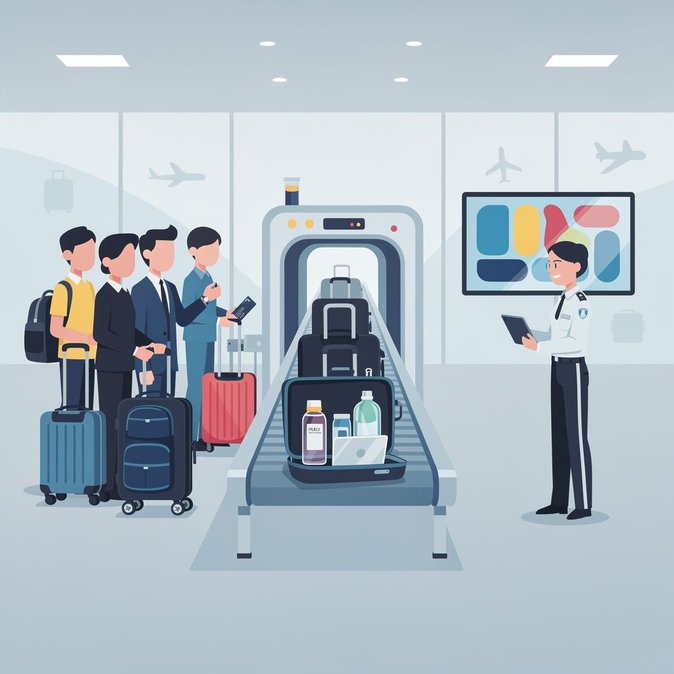
From 3 July 2026 the airport completed the installation of 35 computer-tomography (CT) scanners across all central checkpoints. 3-D imagery allows officers to identify solid and liquid explosives without forcing passengers to unpack electronics or place toiletries in 100-ml containers, and the liquid allowance for cabin bags has been raised to two litres. The upgrade is the first full-scale deployment of next-generation scanners in the German-speaking EU and cost roughly €25 million. According to Flughafen Wien AG, the technology will also be built into the Terminal 3 southern extension that is due to open in Q2 2027, ensuring consistency across the hub’s growing capacity. For corporates the change removes a major pain-point: employees on tight connections no longer lose time reorganising bags, while premium cabin travellers still retain fast-track lanes that now move even quicker. The airport nevertheless advises travellers to arrive early during the busy school-holiday period because officers will selectively pull bags containing dense foods, creams or thermos flasks for secondary screening. Multinational mobility managers should update pre-trip briefings: liquids purchased air-side in Vienna may still breach 100-ml limits at transfer airports that have not yet adopted CT scanners. Travellers making same-day returns should therefore carry receipts and keep bottles under the old 100-ml threshold unless the final destination also permits larger volumes.
For travellers needing to confirm visa requirements alongside these security upgrades, VisaHQ’s Austrian portal offers a quick way to check entry rules, arrange e-visas, and obtain supporting documents for short-notice business trips through Vienna. The platform’s in-house experts track regulatory changes worldwide, so mobility teams can pair the new CT-scanner convenience with seamless border compliance.
From 3 July 2026 the airport completed the installation of 35 computer-tomography (CT) scanners across all central checkpoints. 3-D imagery allows officers to identify solid and liquid explosives without forcing passengers to unpack electronics or place toiletries in 100-ml containers, and the liquid allowance for cabin bags has been raised to two litres. The upgrade is the first full-scale deployment of next-generation scanners in the German-speaking EU and cost roughly €25 million. According to Flughafen Wien AG, the technology will also be built into the Terminal 3 southern extension that is due to open in Q2 2027, ensuring consistency across the hub’s growing capacity. For corporates the change removes a major pain-point: employees on tight connections no longer lose time reorganising bags, while premium cabin travellers still retain fast-track lanes that now move even quicker. The airport nevertheless advises travellers to arrive early during the busy school-holiday period because officers will selectively pull bags containing dense foods, creams or thermos flasks for secondary screening. Multinational mobility managers should update pre-trip briefings: liquids purchased air-side in Vienna may still breach 100-ml limits at transfer airports that have not yet adopted CT scanners. Travellers making same-day returns should therefore carry receipts and keep bottles under the old 100-ml threshold unless the final destination also permits larger volumes.