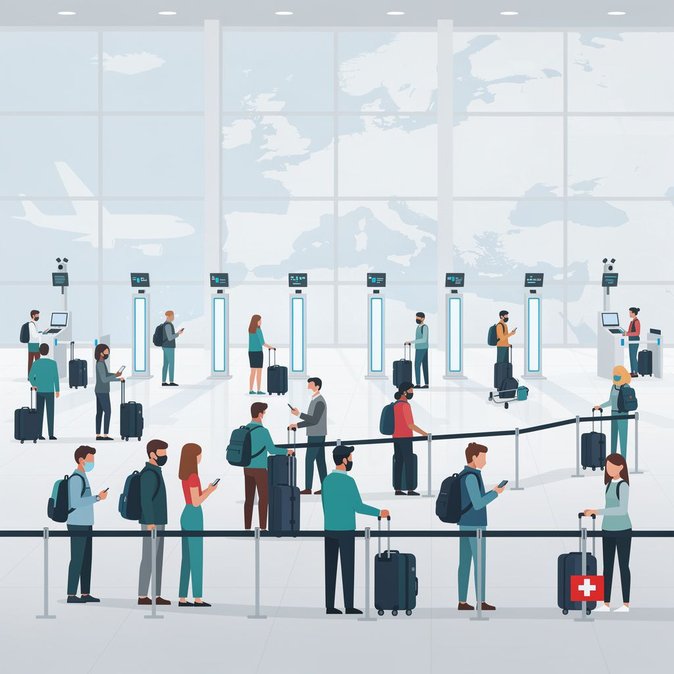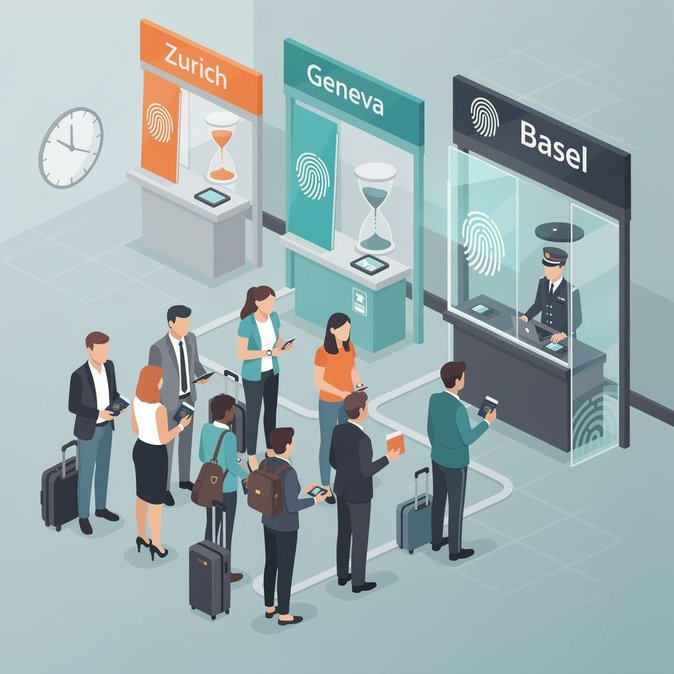
On 3 July Switzerland’s three international gateways—Zurich, Geneva and Basel EuroAirport—issued coordinated traveller advisories urging passengers to arrive at least two to three hours before departure during July and August. The warning follows days of mounting complaints about bottlenecks at the new biometric Entry/Exit System (EES) kiosks, now compulsory for all third-country nationals entering Schengen.
Travellers who still need to secure the appropriate visas before arrival can streamline the paperwork with VisaHQ’s online platform. The company’s Switzerland portal offers step-by-step guidance, document checklists and courier submission services that can save valuable time—especially vital now that airport formalities are lengthening.
Airport briefings note that peak-day volumes will exceed 110,000 passengers at Zurich and around 70,000 at Geneva as Swiss schools break for summer. While security checkpoints have been upgraded, the limiting factor is border control. Each first-time EES enrolment involves passport scanning, a facial photo and four fingerprints, a process that typically takes 90–120 seconds—triple the time of a manual stamp. Even a marginal slowdown translates into hour-long queues when several wide-body flights land back-to-back. The aviation industry has been lobbying Brussels for permission to suspend EES during peak periods, but no blanket exemption exists. As a result, Swiss ground-handling teams have re-sequenced staff rosters, and Zurich has opened additional manual booths alongside the automated kiosks. Geneva airport is recommending three-hour report times at weekends; Basel EuroAirport is advising at least two hours. For globally mobile staff, the operational impact is significant. Late-afternoon departures to the UK and US already experience chronic push-back delays as inbound aircraft await connecting passengers held in passport control. Employers should factor longer door-to-door travel times into assignment budgets, and travel managers may wish to brief employees on kiosk procedures to reduce fumbling at the machines. Travellers with EU, EFTA or Swiss passports can still use e-gates, but mixed-nationality families must remain together in the slower all-passports lane. Airlines are reminding premium-class customers that priority security lanes do not extend to sovereign border checks, a distinction that has caught many frequent fliers unprepared.
Travellers who still need to secure the appropriate visas before arrival can streamline the paperwork with VisaHQ’s online platform. The company’s Switzerland portal offers step-by-step guidance, document checklists and courier submission services that can save valuable time—especially vital now that airport formalities are lengthening.
Airport briefings note that peak-day volumes will exceed 110,000 passengers at Zurich and around 70,000 at Geneva as Swiss schools break for summer. While security checkpoints have been upgraded, the limiting factor is border control. Each first-time EES enrolment involves passport scanning, a facial photo and four fingerprints, a process that typically takes 90–120 seconds—triple the time of a manual stamp. Even a marginal slowdown translates into hour-long queues when several wide-body flights land back-to-back. The aviation industry has been lobbying Brussels for permission to suspend EES during peak periods, but no blanket exemption exists. As a result, Swiss ground-handling teams have re-sequenced staff rosters, and Zurich has opened additional manual booths alongside the automated kiosks. Geneva airport is recommending three-hour report times at weekends; Basel EuroAirport is advising at least two hours. For globally mobile staff, the operational impact is significant. Late-afternoon departures to the UK and US already experience chronic push-back delays as inbound aircraft await connecting passengers held in passport control. Employers should factor longer door-to-door travel times into assignment budgets, and travel managers may wish to brief employees on kiosk procedures to reduce fumbling at the machines. Travellers with EU, EFTA or Swiss passports can still use e-gates, but mixed-nationality families must remain together in the slower all-passports lane. Airlines are reminding premium-class customers that priority security lanes do not extend to sovereign border checks, a distinction that has caught many frequent fliers unprepared.