Passengers booked on Sunday flights between Germany and Italy faced widespread cancellations and delays after multiple Italian aviation unions launched a 24-hour national strike. The walkout, called by Cub Trasporti and supported by pilot and cabin-crew unions at EasyJet, runs from 00:00 to 23:59 on 5 July.
Whether you’re rebooking flights or pivoting to rail, VisaHQ can streamline the travel-document side of the equation, handling Schengen visa applications, passport renewals and ATA carnet extensions online; for Germany-based travellers, the service hub at provides real-time status tracking and live support so administrative hurdles don’t compound the disruption.
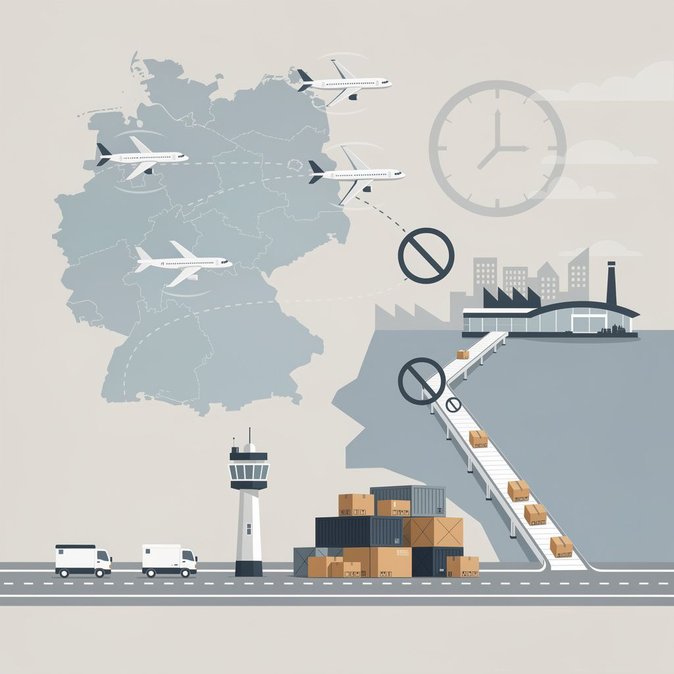
Protective slots (07:00–10:00 and 18:00–21:00) ensure a skeleton schedule, but German carriers report knock-on effects: Lufthansa cancelled 24 rotations from Frankfurt and Munich to Milan, Rome and Naples, while Eurowings scrubbed eight services from Düsseldorf and Hamburg. Under EU Regulation 261/2004, industrial action by third-party service providers counts as an “extraordinary circumstance,” so airlines must rebook or refund but do not owe compensation. Nevertheless, business travellers could face overnight stays because alternative seats during Germany’s school-holiday peak are scarce. Travel-management companies advise clients to switch to rail on the Munich–Verona and Frankfurt–Milan corridors where feasible. Cargo flows are hit too. Milan-based freight forwarders say perishable goods and high-value spare-parts shipments connecting via Frankfurt’s night freighters will miss trucking cut-off times, potentially delaying just-in-time deliveries for German automotive plants on Monday. Companies using temporary admission (ATA carnet) for trade-fair equipment should monitor validity if gear is warehoused longer in Italy. German tour operators are urging the Federal Foreign Office to reopen dormant bilateral talks on minimum-service agreements, similar to those Germany has with Spain and France. Until then, mobility managers should track Italian strike calendars—unions have threatened a further 48-hour stoppage in August if wage talks remain stalled.
Whether you’re rebooking flights or pivoting to rail, VisaHQ can streamline the travel-document side of the equation, handling Schengen visa applications, passport renewals and ATA carnet extensions online; for Germany-based travellers, the service hub at provides real-time status tracking and live support so administrative hurdles don’t compound the disruption.
Protective slots (07:00–10:00 and 18:00–21:00) ensure a skeleton schedule, but German carriers report knock-on effects: Lufthansa cancelled 24 rotations from Frankfurt and Munich to Milan, Rome and Naples, while Eurowings scrubbed eight services from Düsseldorf and Hamburg. Under EU Regulation 261/2004, industrial action by third-party service providers counts as an “extraordinary circumstance,” so airlines must rebook or refund but do not owe compensation. Nevertheless, business travellers could face overnight stays because alternative seats during Germany’s school-holiday peak are scarce. Travel-management companies advise clients to switch to rail on the Munich–Verona and Frankfurt–Milan corridors where feasible. Cargo flows are hit too. Milan-based freight forwarders say perishable goods and high-value spare-parts shipments connecting via Frankfurt’s night freighters will miss trucking cut-off times, potentially delaying just-in-time deliveries for German automotive plants on Monday. Companies using temporary admission (ATA carnet) for trade-fair equipment should monitor validity if gear is warehoused longer in Italy. German tour operators are urging the Federal Foreign Office to reopen dormant bilateral talks on minimum-service agreements, similar to those Germany has with Spain and France. Until then, mobility managers should track Italian strike calendars—unions have threatened a further 48-hour stoppage in August if wage talks remain stalled.