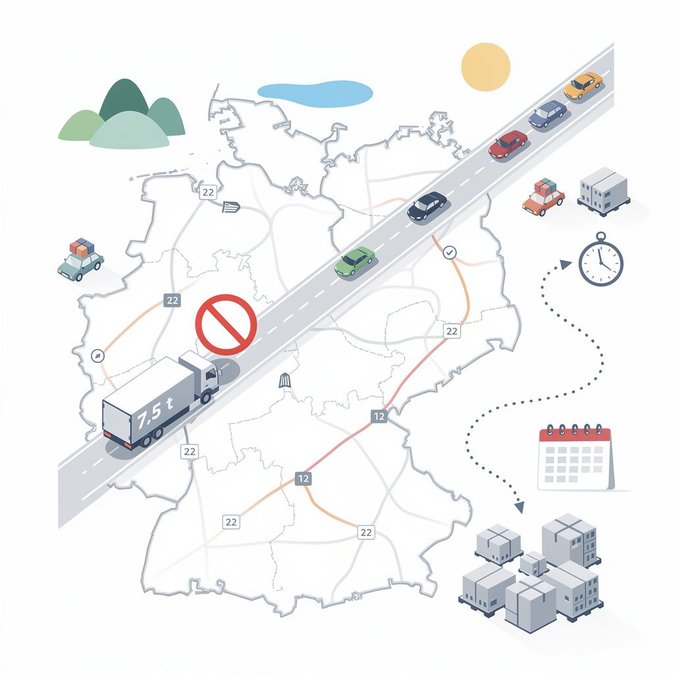
Germany’s annual holiday truck ban took effect at 07:00 on 4 July 2026, covering 22 key autobahn corridors plus two federal roads every Saturday until 31 August. The Ferienreiseverordnung prohibits lorries over 7.5 tonnes and any truck-and-trailer combinations carrying goods for hire or reward from 07:00 to 20:00. The restriction aims to keep tourist traffic flowing during the peak getaway season that began this weekend in Saxony, Schleswig-Holstein and three other Länder. While private motorists welcome clearer lanes, supply-chain managers face compressed delivery windows. DHL Freight says it has rescheduled 1 200 domestic legs to week-nights and shifted 8 percent of volumes to rail or short-sea services. Automotive supplier ZF Friedrichshafen has activated “holiday stock buffers” at assembly plants to avoid production stops. Exemptions apply to perishables, emergency vehicles and military transports, but most retail and e-commerce cargo must wait. The Federal Office for Goods Transport warns that non-compliant drivers risk a €100 fine and one penalty point in the Verkehrszentralregister. Transport associations criticise the blanket rule, arguing that modern telematics could allow dynamic lane management instead. For international movers the ban primarily affects intra-German legs of European road shipments. Mobility providers advise expatriates planning household-goods moves to avoid Saturday pick-ups or arrange for warehouse storage until Sunday. Air-cargo road feeders into Frankfurt, Cologne and Munich also need replanning to stay within flight cut-off times. Longer-term, the industry hopes that Germany’s federal-states transport ministers will open more dedicated truck lanes during future holiday periods, but no pilot programmes are scheduled for 2026.
Source: Ruhr24