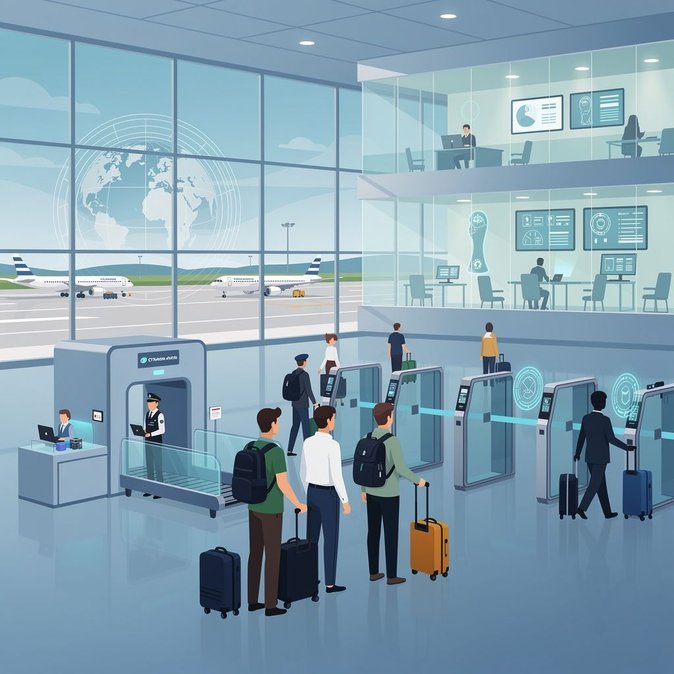
As matchdays arrive, Vancouver International Airport (YVR) says it expects 2.7 million passengers between June 8 and July 12—an overlap of FIFA World Cup traffic, peak cruise season and summer holidays. In a July 5 operational update the airport detailed new computed-tomography (CT) scanners at domestic and international checkpoints, 42 biometric-enabled boarding gates (28 full e-gates) and a 24-hour coordination centre for accredited teams and media.
For travelers still sorting out entry permissions, VisaHQ’s digital platform can simplify the process of securing Canadian visitor visas or Electronic Travel Authorizations well before kick-off. The service—available at https://www.visahq.com/canada/—offers step-by-step guidance, document checking, and expedited processing options that eliminate last-minute airport surprises.
The upgrades aim to keep average security-wait times under 15 minutes even as daily volumes top 90,000. YVR urges travellers to treat flights “like event start times” by arriving earlier, pre-booking parking and considering transit. For business travellers, the CT lanes mean laptops and liquids can stay in bags, while biometric gates cut boarding times by up to 30 percent—a boon for tight connections to Asia-Pacific hubs. Canada Border Services Agency officers will receive real-time load forecasts from the coordination desk to adjust staffing. The airport has also deployed a multilingual chatbot that answers visa-on-arrival and entry-requirement queries in English, French, Spanish and Mandarin—languages mapping to the largest fan contingents. Airlines operating charter flights for national teams have secured dedicated remote stands to avoid bottlenecks at common-use gates. With tournament traffic peaking again for the July 19 final in the U.S., YVR’s playbook is expected to inform Toronto Pearson and regional airports preparing for 2027 Pan-Am Games traffic. Travellers connecting onward to Calgary or Edmonton should still allow extra buffer, as domestic feeder flights are projected to run at 95 percent load factors during match days.
For travelers still sorting out entry permissions, VisaHQ’s digital platform can simplify the process of securing Canadian visitor visas or Electronic Travel Authorizations well before kick-off. The service—available at https://www.visahq.com/canada/—offers step-by-step guidance, document checking, and expedited processing options that eliminate last-minute airport surprises.
The upgrades aim to keep average security-wait times under 15 minutes even as daily volumes top 90,000. YVR urges travellers to treat flights “like event start times” by arriving earlier, pre-booking parking and considering transit. For business travellers, the CT lanes mean laptops and liquids can stay in bags, while biometric gates cut boarding times by up to 30 percent—a boon for tight connections to Asia-Pacific hubs. Canada Border Services Agency officers will receive real-time load forecasts from the coordination desk to adjust staffing. The airport has also deployed a multilingual chatbot that answers visa-on-arrival and entry-requirement queries in English, French, Spanish and Mandarin—languages mapping to the largest fan contingents. Airlines operating charter flights for national teams have secured dedicated remote stands to avoid bottlenecks at common-use gates. With tournament traffic peaking again for the July 19 final in the U.S., YVR’s playbook is expected to inform Toronto Pearson and regional airports preparing for 2027 Pan-Am Games traffic. Travellers connecting onward to Calgary or Edmonton should still allow extra buffer, as domestic feeder flights are projected to run at 95 percent load factors during match days.