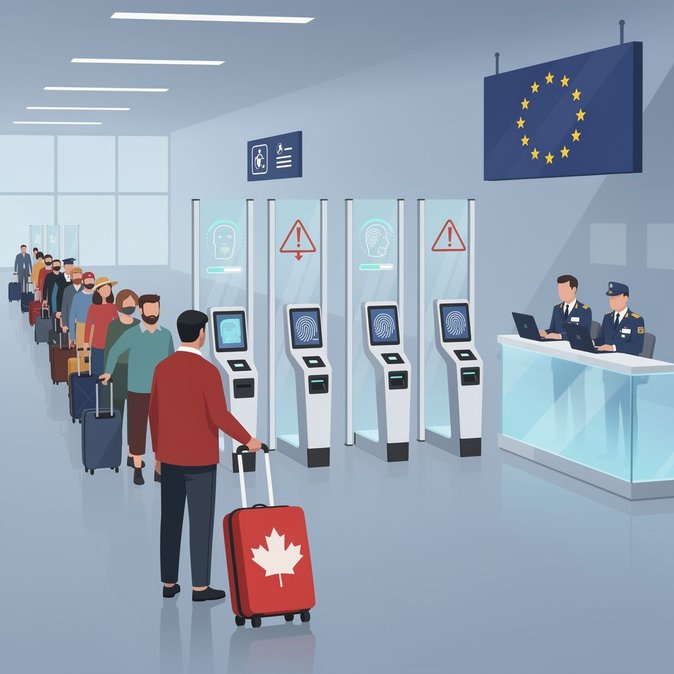
Summer demand and tight airline schedules converged on 6 July 2026 to create a ripple of 124 flight delays and 22 cancellations at Montréal–Trudeau International Airport. Data aggregated from flight-tracking platforms show the bulk of irregularities hit high-frequency corridors linking Montreal with Toronto and Vancouver, alongside transatlantic services to Paris. Air Canada and its regional partner Jazz bore the brunt, joined by Porter Airlines and Air France. Analysts blame a familiar cocktail: stretched crew resources, limited spare aircraft and compressed turnaround times that leave little buffer when minor technical or weather issues arise. For business travellers, the immediate impact was missed connections, overnight layovers and mounting re-accommodation costs. Because many affected routes are short-haul shuttles feeding long-haul banks, knock-on effects reached hubs in Western Canada, the United States and Europe. Under Canada’s Air Passenger Protection Regulations, travellers may be entitled to compensation if delays are within an airline’s control. Companies should remind employees to keep boarding passes, expense receipts and screenshots of delay notices, and to submit claims within one year. With peak season still under way, travel managers should build larger connection cushions, maintain active travel-risk tracking tools and consider buying change-flexible corporate fares for itineraries transiting Montreal.
Source: The Traveler