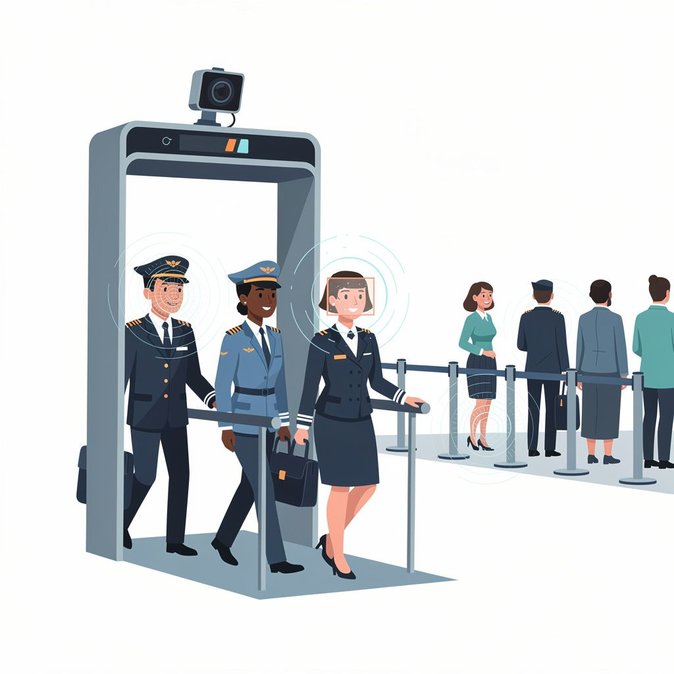
The Transportation Security Administration has begun phasing in the Crewmember Access Point (CMAP), a facial-comparison system that will eventually replace the industry-run Known Crewmember lanes at U.S. airports. Biometric Update reports that the first CMAP checkpoints went live at Washington Reagan, Dulles and Las Vegas on 22 June, with a second wave—including San Diego, Honolulu, Salt Lake City, Austin and Phoenix—beginning the week of 5 July. Under CMAP, pilots and flight attendants present themselves at a dedicated portal where a live photo is matched to an image already stored in federal databases. If matched, they bypass passenger screening; if not, they are redirected to the regular security queue. Participation is voluntary, but airlines must upload crew rosters and pay a new $19 per-employee annual fee starting 1 January 2027. The change brings what was a privately managed vetting system under direct TSA control and folds aviation workers into the government’s rapidly expanding biometric identity infrastructure. Airline unions say they are monitoring privacy safeguards and advising members of the consent process. Early anecdotal reports suggest some flight attendants are opting out, concerned about data use and facial-recognition accuracy for women of color.
![TSA Replaces ‘Known Crewmember’ with Facial-Recognition CMAP Program]()
Even as CMAP modernizes domestic security lanes, international flight crews still contend with a maze of visa and permit requirements for overseas rotations. VisaHQ can shoulder that administrative burden, expediting passports, work visas and health documentation for aviation professionals so they stay compliant and on schedule. Discover how the service works at
For corporate flight departments and charter operators, enrolling crew in CMAP will be essential to keep turnaround times competitive with scheduled airlines. Companies should budget for the annual fee and update internal policies to reflect the mandatory facial-image capture at crew checkpoints. TSA aims to complete the nationwide transition by 30 September. The agency argues the shift will improve security, reduce insider-threat risk and eliminate “swipe-and-go” barcode fraud that occasionally plagued the decade-old Known Crewmember program.

Even as CMAP modernizes domestic security lanes, international flight crews still contend with a maze of visa and permit requirements for overseas rotations. VisaHQ can shoulder that administrative burden, expediting passports, work visas and health documentation for aviation professionals so they stay compliant and on schedule. Discover how the service works at
For corporate flight departments and charter operators, enrolling crew in CMAP will be essential to keep turnaround times competitive with scheduled airlines. Companies should budget for the annual fee and update internal policies to reflect the mandatory facial-image capture at crew checkpoints. TSA aims to complete the nationwide transition by 30 September. The agency argues the shift will improve security, reduce insider-threat risk and eliminate “swipe-and-go” barcode fraud that occasionally plagued the decade-old Known Crewmember program.