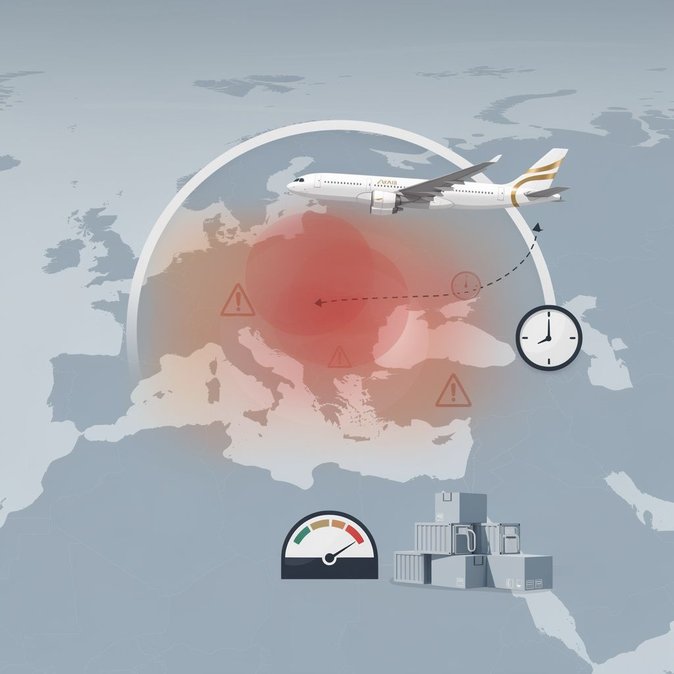
The European Union Aviation Safety Agency (EASA) issued an urgent bulletin on 8 July instructing all EU-licensed airlines to avoid the flight-information regions of Tehran, Baghdad and Beirut until at least 31 August. Although the advisory is aimed at European carriers, it has immediate knock-on effects for UAE routes because most westbound flights from Dubai and Abu Dhabi to Europe traditionally overfly Iran or Iraq. Carriers such as Lufthansa, KLM and British Airways must now route south over Saudi Arabia and Egypt, adding up to 40 minutes to block-times and roughly US $3,000 in extra fuel per sector. EASA said the decision followed renewed drone and missile exchanges between US forces and Iranian-aligned militias that have spilled into Iraqi territory. The agency’s conflict-zone information bulletin underscores the “fragile” nature of the 17 June cease-fire and warns of possible “misidentification” risks for civil aircraft. UAE-based Emirates, Etihad and flydubai are not directly governed by EASA but typically follow the strictest global safety guidance and confirmed they will continue to avoid the affected FIRs “for the foreseeable future”. Freight forwarders in Dubai’s Jebel Ali Free Zone report that Europe-bound cargo rates have already risen 6–8 % since the bulletin, driven by both longer routings and tighter wide-body capacity. Corporate mobility teams should update travel-time estimates, revisit duty-of-care routing policies and alert travellers to potential connection mis-matches at European hubs.