China’s State Council has formally approved the Tourism Powerhouse Plan for the 15th Five-Year Plan period (2026-30), giving the country its first top-level roadmap focused squarely on turning tourism into a pillar of national strength.
The plan lays out parallel targets for the domestic and the inbound markets. On the international side, Beijing wants annual inbound arrivals to climb from about 150 million in 2025 to 190 million by 2030, and to lift inbound visitor spending to more than US $150 billion.
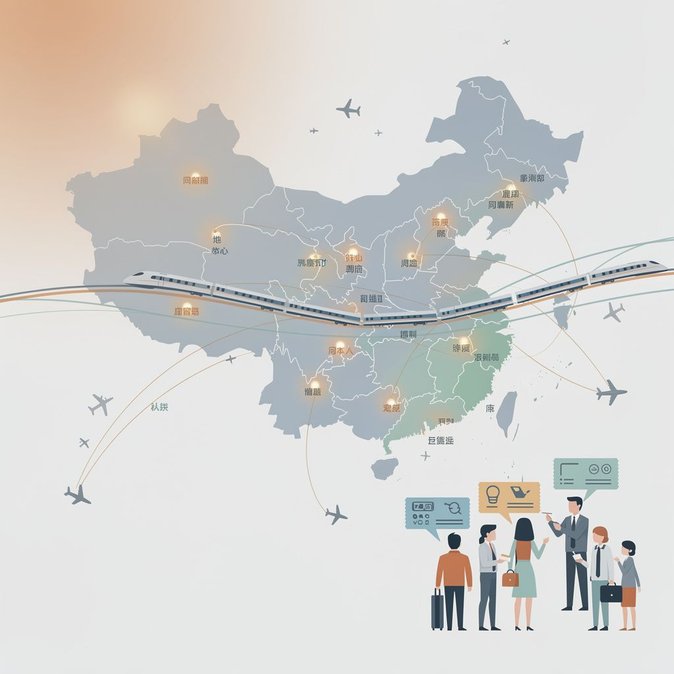
To get there, the document instructs ministries to expand the unilateral visa-free list, widen the 240-hour transit-visa programme to more ports, and accelerate new international air and rail links. It also orders payment providers to guarantee ubiquitous acceptance of overseas cards and digital wallets, and calls for blanket roll-out of AI-powered translation devices at major attractions, stations and ports.
For organisations and travellers trying to stay ahead of these shifting entry requirements, VisaHQ can be a time-saving ally. The company’s China services portal tracks every regulatory change in real time and can handle the paperwork for tourist, business and transit visas, helping clients secure approvals quickly as new exemptions and visa-free schemes come online.
Domestically, the blueprint envisages 8.3 billion annual trips and ¥7.7 trillion (US $1.13 trillion) in tourism spend by 2030. Provincial governments are told to draw up culture-and-tourism integration zones, while regulators will pilot new themed trains and low-altitude flight routes to knit lesser-known cities into the national network.
A modern tourism governance system—covering safety, environmental standards, data sharing and intellectual-property protection—will be put in place.
For business-mobility managers the plan is significant on several fronts. Eased visa access will reduce lead-times for short-notice travel; expanded air connectivity should open non-stop options to second-tier industrial cities; and the push for multilingual, cash-free services promises to smooth on-the-ground logistics for project teams.
Multinationals may also find more MICE-ready venues as the government pledges to cultivate “world-class” convention clusters in Beijing–Tianjin-Hebei, the Yangtze River Delta and the Greater Bay Area.
Companies with mobile talent in China should, however, prepare for tighter compliance. The blueprint emphasises “development and security in tandem”, signalling continued scrutiny of cross-border data flows, drone usage and low-altitude charter flights.
HR and mobility teams should monitor forthcoming implementing rules from the Ministry of Culture and Tourism, the National Immigration Administration and the Civil Aviation Administration to ensure assignment and travel policies stay aligned.
The plan lays out parallel targets for the domestic and the inbound markets. On the international side, Beijing wants annual inbound arrivals to climb from about 150 million in 2025 to 190 million by 2030, and to lift inbound visitor spending to more than US $150 billion.
To get there, the document instructs ministries to expand the unilateral visa-free list, widen the 240-hour transit-visa programme to more ports, and accelerate new international air and rail links. It also orders payment providers to guarantee ubiquitous acceptance of overseas cards and digital wallets, and calls for blanket roll-out of AI-powered translation devices at major attractions, stations and ports.
For organisations and travellers trying to stay ahead of these shifting entry requirements, VisaHQ can be a time-saving ally. The company’s China services portal tracks every regulatory change in real time and can handle the paperwork for tourist, business and transit visas, helping clients secure approvals quickly as new exemptions and visa-free schemes come online.
Domestically, the blueprint envisages 8.3 billion annual trips and ¥7.7 trillion (US $1.13 trillion) in tourism spend by 2030. Provincial governments are told to draw up culture-and-tourism integration zones, while regulators will pilot new themed trains and low-altitude flight routes to knit lesser-known cities into the national network.
A modern tourism governance system—covering safety, environmental standards, data sharing and intellectual-property protection—will be put in place.
For business-mobility managers the plan is significant on several fronts. Eased visa access will reduce lead-times for short-notice travel; expanded air connectivity should open non-stop options to second-tier industrial cities; and the push for multilingual, cash-free services promises to smooth on-the-ground logistics for project teams.
Multinationals may also find more MICE-ready venues as the government pledges to cultivate “world-class” convention clusters in Beijing–Tianjin-Hebei, the Yangtze River Delta and the Greater Bay Area.
Companies with mobile talent in China should, however, prepare for tighter compliance. The blueprint emphasises “development and security in tandem”, signalling continued scrutiny of cross-border data flows, drone usage and low-altitude charter flights.
HR and mobility teams should monitor forthcoming implementing rules from the Ministry of Culture and Tourism, the National Immigration Administration and the Civil Aviation Administration to ensure assignment and travel policies stay aligned.