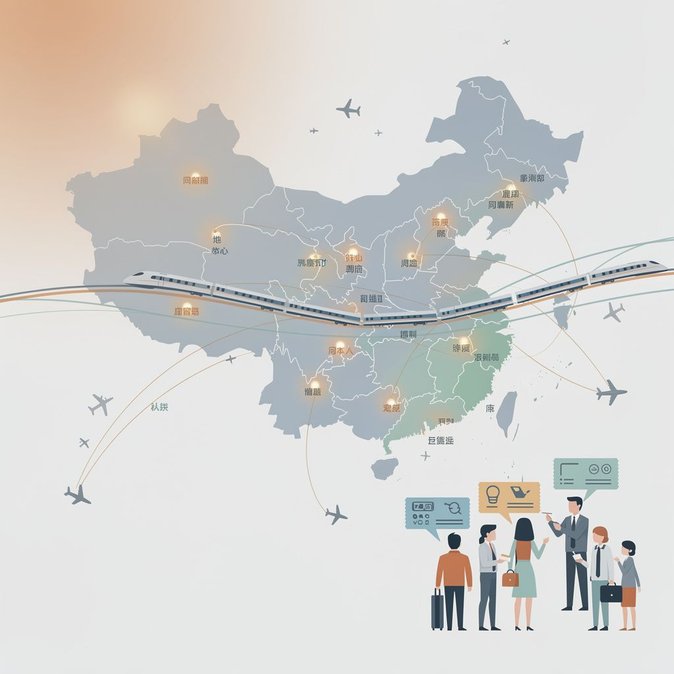
China’s 62-day summer travel rush, which began on 1 July, is on track to generate a record 1.01 billion railway passenger trips, with domestic and international flight bookings also hitting new highs, according to data compiled by Xinhua and China State Railway Group. In just the first three days, railways handled more than 38 million passengers, while aviation platforms logged 27 million July bookings—up 89 percent week-on-week. Airlines are scrambling to redeploy capacity: China Eastern has lifted Shanghai–Urumqi frequencies by 51 percent, and traffic on its repositioned Shanghai–Yining route has more than doubled after the shift to Hongqiao airport. The bigger story is geographic. Search and booking data from Qunar and Tongcheng show growth shifting away from the usual tier-one hotspots toward smaller destinations such as Qinhuangdao, Yili and Jingdezhen, driven by demand for cultural immersion and craft-focused travel. Industrial-heritage and “research” train products—from panda-themed services in Sichuan to Silk Road study tours—are selling out within minutes of release. For mobility planners the redistribution of demand has two implications. First, flights to secondary manufacturing hubs may be scarcer (and pricier) at short notice as leisure travellers compete for seats. Second, corporate shuttle programmes and relocation service providers can piggy-back on the beefed-up rail capacity that now links coastal megacities with inland prefectures. Policy tail-winds are also at play. Eight central ministries in June issued joint measures promoting rail-tourism integration, spurring railway bureaus to green-light more themed services and to preload tourist-attraction tickets into the 12306 booking app—a convenience foreign residents can exploit with passport-based log-ins.
Source: Xinhua