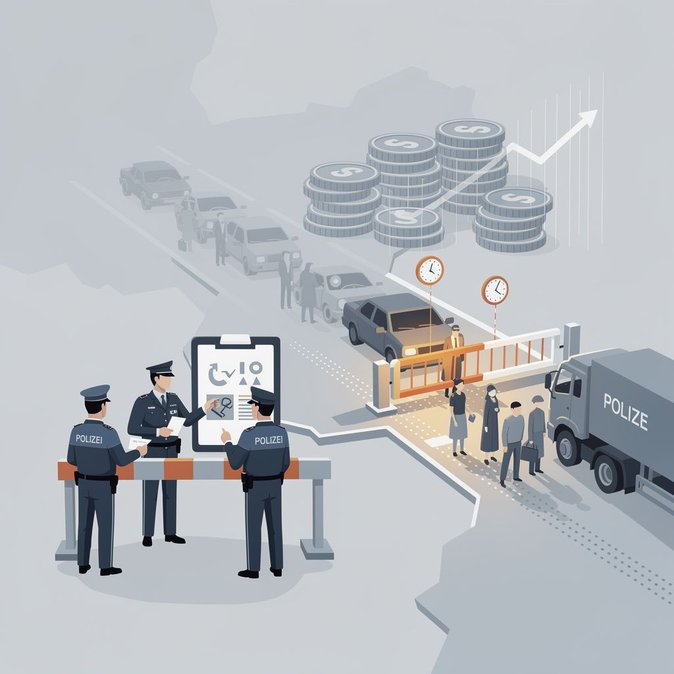
In a candid radio interview on 8 July, Germany’s new Federal Police Commissioner Uli Grötsch criticised the ongoing temporary controls at the borders with Austria, the Czech Republic and Poland, calling them “an enormous logistical and human burden” for officers. Grötsch noted that since controls were re-introduced in 2024 more than 4,000 additional shifts have been required each month, stretching resources that are also needed for airport security and the protection of Jewish institutions. While the Interior Ministry argues the measure is necessary to curb irregular migration, the Commissioner urged lawmakers to weigh the marginal gains against the operational strain and the 70 million euro annual cost. Business-travel stakeholders are equally concerned. Coach operators on the Munich–Salzburg route report delays of up to 50 minutes when spot checks coincide with peak tourist traffic, complicating duty-roster planning and raising overtime bills. A Munich-based HR director told Tagesschau that her company now routs Austrian commuters through lesser-used crossings to avoid late arrivals. The Bundestag is expected to revisit the issue after the summer break, when the EU will publish new guidelines on proportionate use of internal Schengen controls.
Source: Tagesschau