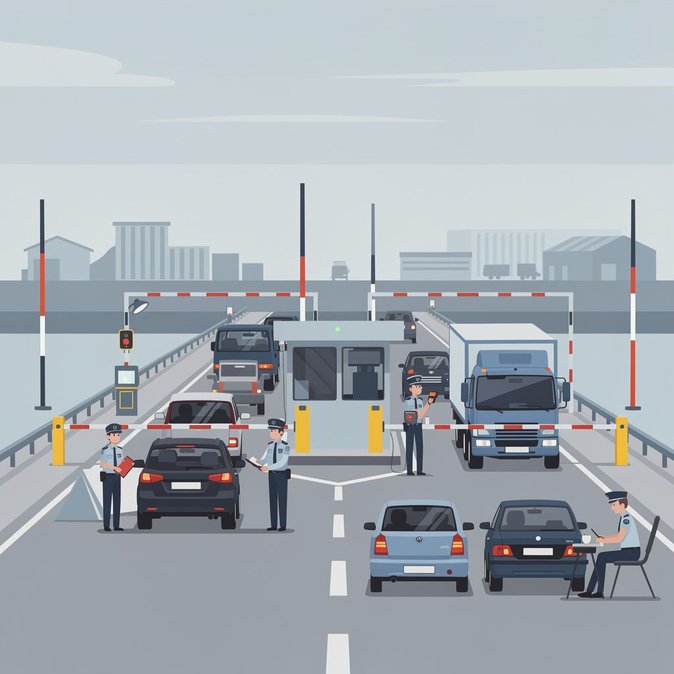
Poland’s Maritime Border Guard marked the first anniversary of temporary controls on its frontier with Germany on 8 July 2026, publishing statistics that underscore how deeply intra-EU mobility has been disrupted. Over the past twelve months officers stopped more than 1.1 million people and 520 000 vehicles on the 170-kilometre stretch of the West Pomeranian border. They refused entry to 165 travellers—mostly from Ukraine, Syria, India and Russia—and arrested 35 smugglers who were helping migrants circumvent Schengen rules. The controls were reinstated in July 2025 after Germany prolonged its own internal checks, citing irregular migration via Belarus and the Western Balkans. What was billed as a 30-day security measure has now become the new normal, complicating daily life for thousands of commuters who live in Szczecin but work in Greifswald, and for German logistics firms that run just-in-time deliveries across the A11 motorway. German freight association DSLV says wait times for trucks average 45 minutes, adding €12 million a year in labour and fuel costs. The tourism board for Mecklenburg-Western Pomerania reports a 6 % drop in Polish weekend visitors, hitting retailers in border towns such as Pasewalk. Companies have started issuing “border letters” so technicians can explain delays to clients when spot checks overrun. Both governments insist the checks are lawful under Article 25 of the Schengen Borders Code, but EU Home Affairs Commissioner Ylva Johansson last month urged Berlin and Warsaw to move to “smart risk-based policing” instead of blanket controls. Diplomats are drafting a joint action plan focusing on shared patrols and automatic licence-plate recognition, but no timeline has been set. For global mobility teams the takeaway is that employees driving rental cars between German and Polish sites should carry passports, residence permits and proof of accommodation. Polish authorities say digital copies on a smartphone are not sufficient; originals must be shown on request. Cross-border assignment schedules may need extra buffer time until at least October, when Warsaw will again review the measure.
Source: Straż Graniczna