A year ago the European Commission insisted that the new European Travel Information and Authorisation System (ETIAS) would be switched on in the final quarter of 2026. On 8 July, however, officials quoted by the Financial Times and picked up by Euronews acknowledged that the timetable is slipping and that a 2027 start now looks “more realistic”. ETIAS is the €20 electronic travel-authorisation that will be required of visitors from visa-exempt countries such as the United Kingdom, the United States, Canada and Australia. Once operational it will apply to all 30 Schengen and associated states, including Spain, and is expected to affect some 45 million trips a year.
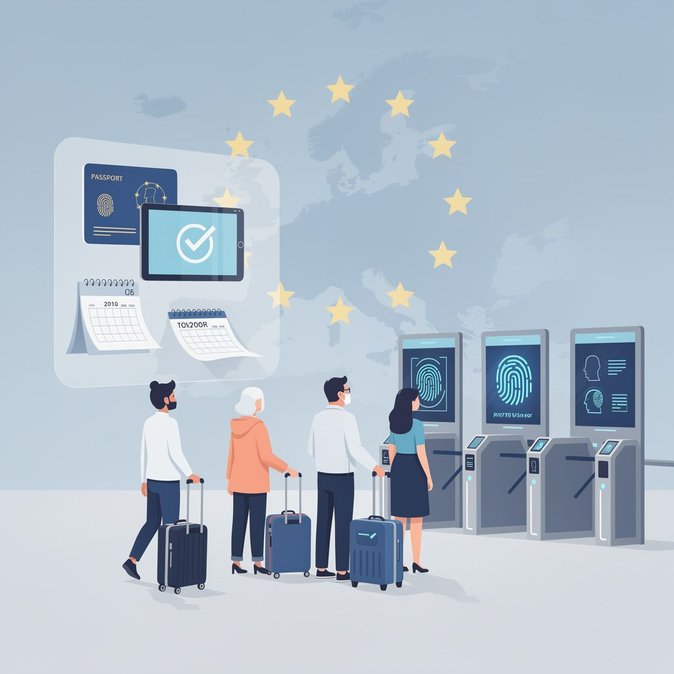
Behind the delay is the troubled roll-out of the Schengen Entry/Exit System (EES), a biometric border database that became fully operational in April 2026. Airports across the EU – notably Madrid-Barajas, Barcelona-El Prat, Málaga and Alicante – have struggled with fingerprint kiosks that double or treble processing times for non-EU passport holders. Airline and airport associations wrote to Commission President Ursula von der Leyen on 1 July warning that summer traffic could be paralysed unless implementation is slowed. Rather than suspend EES, Brussels has quietly accepted that it must be stabilised before another layer of technology is added.
Travellers and corporate mobility teams looking to stay ahead of these shifting requirements can lean on VisaHQ’s digital visa and travel-document platform. The service’s Spain portal tracks ETIAS developments in real time and offers automated alerts, document checks and live-agent support, simplifying compliance for both companies and individual visitors when the new authorisation finally goes live.
For Spanish corporates, mobility managers and inbound tour operators the postponement is significant. Summer and autumn trade-fair cycles in Madrid, Barcelona and Valencia will now take place without the added compliance step of an ETIAS approval. Companies that had already prepared staff communications, booking-tool updates and duty-of-care workflows can put those exercises on ice for at least another 12 months – a welcome administrative reprieve at the height of post-pandemic travel recovery.
Nevertheless, experts urge businesses not to shelve preparations entirely. The core concepts of ETIAS – pre-screening, API connections with carriers and automated refusals – are locked into EU law and will arrive sooner or later. Travel-management companies recommend capturing travellers’ passport data well ahead of departure and building an automated alert into online-booking tools so that employees are reminded to apply for ETIAS once the definitive date is known.
Large Spanish employers with significant North American visitor flows (IT multinationals in Málaga’s TechPark, for example) are already stress-testing their systems with mock applications. The delay also buys time for Spanish airports to finish expanding biometric e-gates and for Aena – the operator of 46 airports – to finalise new staffing models. Barajas alone expects 5,000 daily ETIAS-eligible arrivals in peak season; handling that volume smoothly will be critical to Spain’s 2027 tourism and conference ambitions.
In short, travellers get a short-term gain, but the operational homework for government, airports and companies remains very real.
Behind the delay is the troubled roll-out of the Schengen Entry/Exit System (EES), a biometric border database that became fully operational in April 2026. Airports across the EU – notably Madrid-Barajas, Barcelona-El Prat, Málaga and Alicante – have struggled with fingerprint kiosks that double or treble processing times for non-EU passport holders. Airline and airport associations wrote to Commission President Ursula von der Leyen on 1 July warning that summer traffic could be paralysed unless implementation is slowed. Rather than suspend EES, Brussels has quietly accepted that it must be stabilised before another layer of technology is added.
Travellers and corporate mobility teams looking to stay ahead of these shifting requirements can lean on VisaHQ’s digital visa and travel-document platform. The service’s Spain portal tracks ETIAS developments in real time and offers automated alerts, document checks and live-agent support, simplifying compliance for both companies and individual visitors when the new authorisation finally goes live.
For Spanish corporates, mobility managers and inbound tour operators the postponement is significant. Summer and autumn trade-fair cycles in Madrid, Barcelona and Valencia will now take place without the added compliance step of an ETIAS approval. Companies that had already prepared staff communications, booking-tool updates and duty-of-care workflows can put those exercises on ice for at least another 12 months – a welcome administrative reprieve at the height of post-pandemic travel recovery.
Nevertheless, experts urge businesses not to shelve preparations entirely. The core concepts of ETIAS – pre-screening, API connections with carriers and automated refusals – are locked into EU law and will arrive sooner or later. Travel-management companies recommend capturing travellers’ passport data well ahead of departure and building an automated alert into online-booking tools so that employees are reminded to apply for ETIAS once the definitive date is known.
Large Spanish employers with significant North American visitor flows (IT multinationals in Málaga’s TechPark, for example) are already stress-testing their systems with mock applications. The delay also buys time for Spanish airports to finish expanding biometric e-gates and for Aena – the operator of 46 airports – to finalise new staffing models. Barajas alone expects 5,000 daily ETIAS-eligible arrivals in peak season; handling that volume smoothly will be critical to Spain’s 2027 tourism and conference ambitions.
In short, travellers get a short-term gain, but the operational homework for government, airports and companies remains very real.