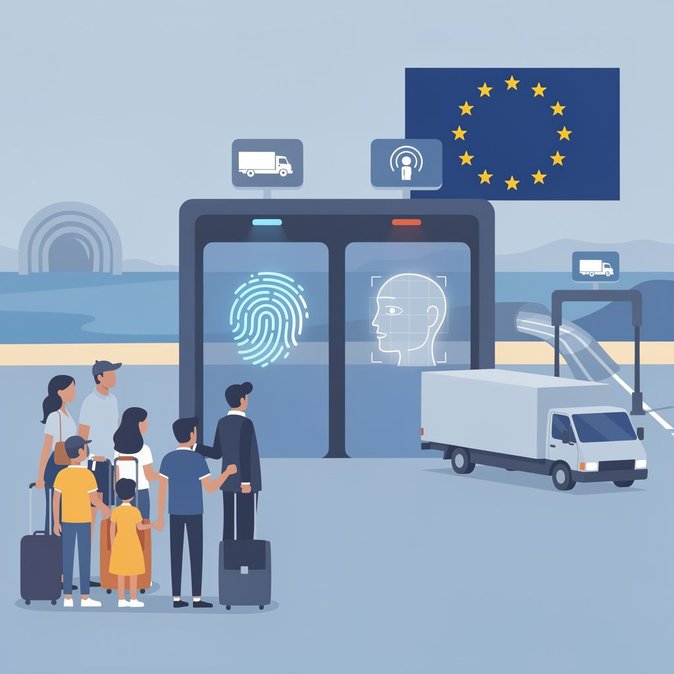
After emergency talks with airline and airport chiefs on 8 July, the European Commission said it “has no mandate” to suspend or delay the EU Entry/Exit System (EES), quashing mounting speculation that the scheme might be put on ice until after the Paris Olympic Games. Since the biometric regime went live in April, it has logged 110 million movements and flagged 1,100 potential security threats, but also generated reports of queues exceeding three hours at some Schengen airports. Carriers led by IATA argued that capacity constraints, particularly at UK-bound departure points such as Amsterdam Schiphol and Madrid Barajas, risk summer chaos. The Commission countered that member states must accelerate kiosk installations and urged airports to open dedicated ‘family and assisted-travel’ lanes. For UK travellers—now classed as third-country nationals—the decision means no let-up in fingerprint and facial-scan requirements when entering or leaving the Schengen Area. Global-mobility teams should ensure employees’ passports are machine-readable and have notched up a full blank page for the QR sticker some border forces still issue as a fallback. Haulage bodies are equally concerned. A letter from 11 British logistics associations warned that failure to streamline the land-border process could see 7,000 lorries stacked on the M20 this Christmas. The Commission said it would look at “pragmatic flexibilities” for freight drivers but offered no specifics.
Source: Agence Europe