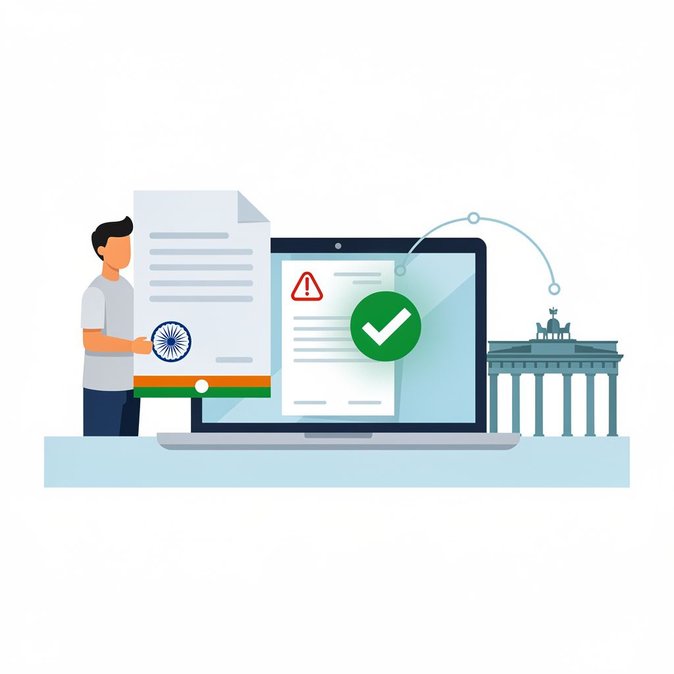
The Academic Evaluation Centre (APS) in New Delhi—jointly run by the German Embassy and DAAD—issued an urgent notice on 9 July 2026 confirming it has installed a new trusted digital-seal certificate for APS reports. During a six-week transition, some PDFs showed signature-validation warnings in Adobe Reader, triggering fears that German universities or VFS visa centres would reject the documents.
For applicants who would rather not navigate the administrative maze alone, VisaHQ can streamline the process. The company’s Germany portal offers real-time guidance on APS certificate updates, appointment booking and the precise document sets that each consulate demands, reducing the risk of last-minute visa rejections.
APS certificates are compulsory for nearly every Indian student seeking a German study visa, verifying that their degrees are authentic and equivalent. With the winter-semester intake rushing to secure appointments, many applicants discovered error messages such as “signature validity unknown.” APS now clarifies that reports issued between December 2025 and 27 April 2026 remain legally valid, provided the file has not been altered. Universities and uni-assist have been told to accept the older seal or to check with APS directly. The centre has implemented a new seal containing a trusted timestamp designed to remain verifiable even after the certificate itself expires. Applicants who downloaded an affected PDF can simply re-download it from the APS portal to obtain the refreshed seal; no re-evaluation fee is required. Visa sections at German missions in Mumbai, Chennai and Bangalore have updated their appointment checklists accordingly. For German institutions, the episode underscores the fragility of an admissions pipeline that now depends on a single digital credential. Several universities told Business Mobility News that they will pilot direct API checks with APS before the next intake. Education consultants advise students to print a colour copy of the certificate and carry the original PDF on a USB stick to visa interviews in case system outages occur. With India remaining the largest source of non-EU students in Germany, resolving the seal issue quickly was essential to avoid a repeat of last year’s backlog that left hundreds of master’s candidates unable to travel before semester start.
For applicants who would rather not navigate the administrative maze alone, VisaHQ can streamline the process. The company’s Germany portal offers real-time guidance on APS certificate updates, appointment booking and the precise document sets that each consulate demands, reducing the risk of last-minute visa rejections.
APS certificates are compulsory for nearly every Indian student seeking a German study visa, verifying that their degrees are authentic and equivalent. With the winter-semester intake rushing to secure appointments, many applicants discovered error messages such as “signature validity unknown.” APS now clarifies that reports issued between December 2025 and 27 April 2026 remain legally valid, provided the file has not been altered. Universities and uni-assist have been told to accept the older seal or to check with APS directly. The centre has implemented a new seal containing a trusted timestamp designed to remain verifiable even after the certificate itself expires. Applicants who downloaded an affected PDF can simply re-download it from the APS portal to obtain the refreshed seal; no re-evaluation fee is required. Visa sections at German missions in Mumbai, Chennai and Bangalore have updated their appointment checklists accordingly. For German institutions, the episode underscores the fragility of an admissions pipeline that now depends on a single digital credential. Several universities told Business Mobility News that they will pilot direct API checks with APS before the next intake. Education consultants advise students to print a colour copy of the certificate and carry the original PDF on a USB stick to visa interviews in case system outages occur. With India remaining the largest source of non-EU students in Germany, resolving the seal issue quickly was essential to avoid a repeat of last year’s backlog that left hundreds of master’s candidates unable to travel before semester start.