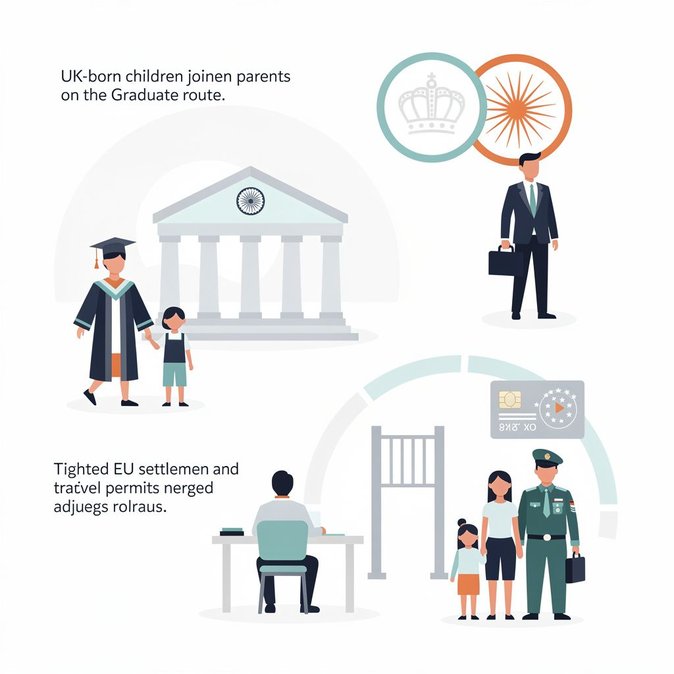
In a late-evening deposit on 9 July 2026 the Home Office placed before Parliament Statement of Changes HC 259 – the twelfth set of rule amendments so far this year. The Explanatory Memorandum makes clear that the package is wide-ranging but highly targeted, closing gaps that had been generating practical headaches for employers, universities and families. First, the Graduate route is amended so that children born in the UK during a parent’s post-study permission can now be added as dependants. Universities had warned that the previous omission left a small cohort of UK-born infants effectively without status; the fix means HR teams no longer need to scramble for discretionary grants when international alumni have babies while on the two-year Graduate visa. Second, the UK’s new Diplomatic Visa Arrangement (DVA) scheme, introduced last year to replace visa waivers with a digital permission, is being extended to holders of Indian diplomatic passports. The change waives fees and biometrics, smoothing short-notice travel while supporting the wider UK-India strategic partnership ahead of the bilateral FTA entering into force on 15 July. Multinationals with government-to-government projects should note the lighter touch process and ensure their travel providers update profiles for eligible officials. Other headline tweaks include clarifications to the EU Settlement Scheme travel permit rules; alignment of the ‘care requirement’ across Appendix FM child routes; provision for children of single serving personnel in Appendix HM Armed Forces; and a refinement of asylum interview procedures under the ‘merged registration’ model designed to accelerate initial decision-making. Although no salary thresholds move this time, mobility teams must update policy documents because most amendments take effect on 7 August 2026. Practically, employers should refresh right-to-work checklists (particularly where staff hold Graduate or Armed Forces dependant status), brief assignees that Indian diplomatic passport holders now need a DVA rather than a waiver, and watch for forthcoming Home Office guidance promised in paragraphs 5.22–5.26 on the new asylum interview triage – an indicator of how future expedited business visitor schemes might be structured.