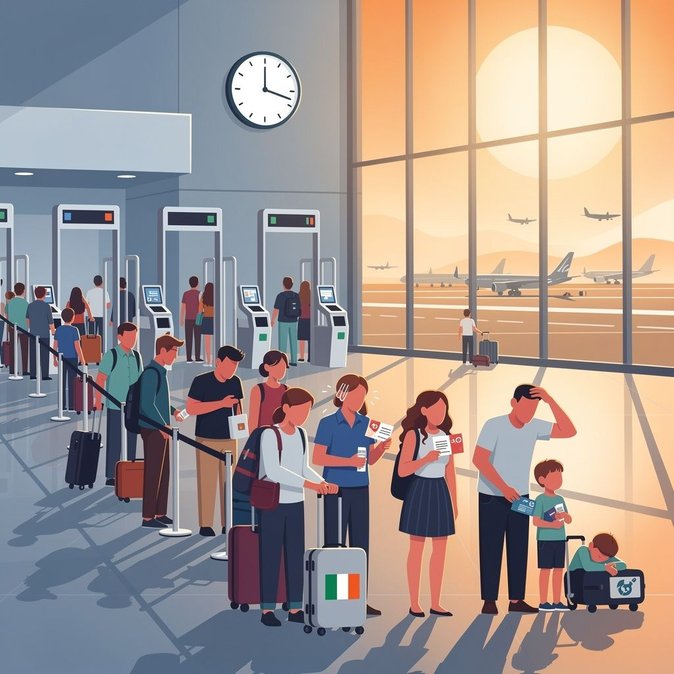
A stark warning from the head of Fraport Greece on 9 July 2026 has intensified scrutiny of the EU’s new Entry–Exit System (EES) as peak summer travel begins. Speaking to The Guardian, chief executive Alexander Zinell described “unpleasant and even dangerous” queues at Greek airports, where non-EU passengers must submit fingerprints and facial images when entering or leaving the Schengen Area. Staff have erected temporary gazebos to protect waiting passengers from 40 °C heat. Although Ireland is not part of Schengen and will not implement EES, the vast majority of outbound Irish leisure and business trips route through Schengen airports. Irish tour operators report hold-times of up to 90 minutes on arrival in Athens and Palma since 1 July, when EES became fully operational. The Irish Travel Agents Association has advised travellers to arrive at Dublin Airport earlier to compensate for possible knock-ons from delayed aircraft returns. Airlines are also feeling the pinch. Ryanair has redeployed extra customer-service staff to Mediterranean gateways and warned that “tight turnarounds” may be impossible if biometric kiosks go down. Industry bodies are urging Brussels to fund additional staffing and shading infrastructure before next month’s bank-holiday surge. For corporate mobility managers the message is clear: build EES-related delays into itineraries, especially for back-to-back meetings in multiple Schengen cities. Irish citizens holding a second EU passport are unaffected, but non-EU assignees based in Ireland who travel on Irish residence permits must complete the full biometric process each time they cross the Schengen frontier. Organisations should brief travellers on keeping fingerprints clean (ink and injuries can cause rejection) and ensure mobile phones are charged so that digital boarding passes remain accessible during extended outdoor waits. EU officials maintain that once initial technical glitches are ironed out, EES will speed up processing by eliminating manual passport stamping. Until then, Irish passengers—and the companies that depend on their timely arrival—should brace for growing pains.
Source: The Guardian