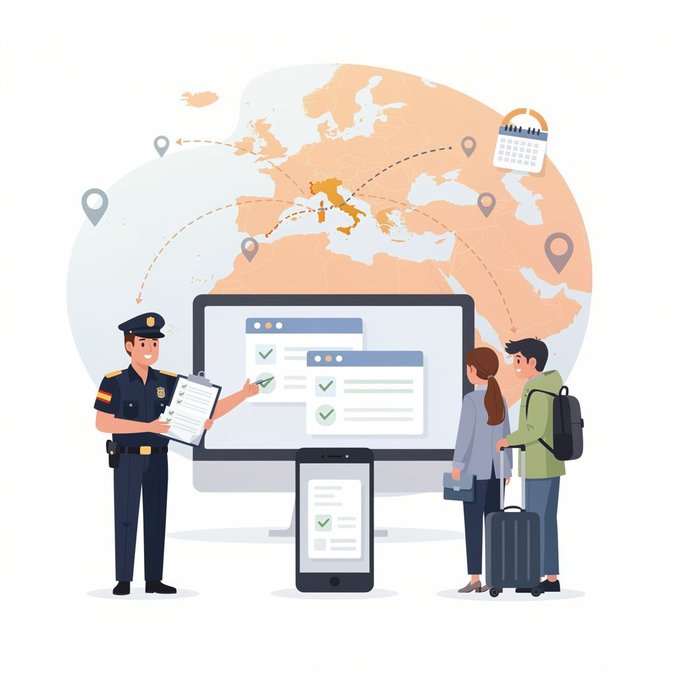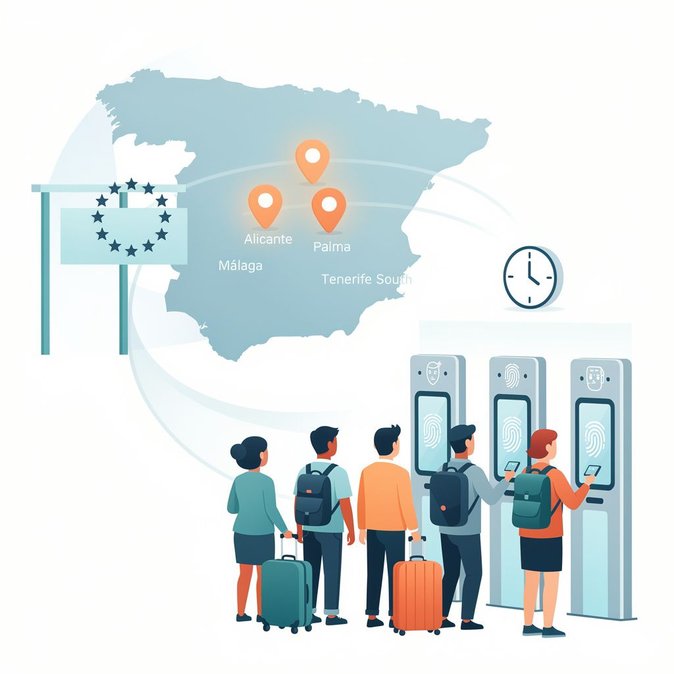
The European Commission has rejected industry pleas for a summer-long suspension of the new Entry/Exit System (EES), meaning British families flying to Spain during school holidays face patchy relief from fingerprint and facial-scan delays. In a briefing highlighted by Euro Weekly News, Brussels said the system—which electronically tracks non-EU nationals’ 90-in-180-day stays—must remain active to preserve data integrity across the Schengen zone. Border authorities may pause first-time biometric enrolment at specific airports when queues become “exceptionally high”, but there will be no EU-wide directive guaranteeing such pauses. Airlines warn that the ad-hoc approach could create inconsistency: passengers who register their biometrics on entry at Málaga could, for example, depart via Palma de Mallorca where the enrolment is still active, risking an overstay flag if systems fail to match records. IATA and Airports Council International say waits of up to five hours have already been reported at some European terminals. Low-cost carrier Ryanair has singled out Alicante-Elche, Málaga-Costa del Sol, Palma and Tenerife South as Spanish airports most vulnerable to summer surges, citing limited kiosks and staffing. Business-travel implications extend beyond leisure passengers. Missed connections on intra-Schengen flights can cascade into schedule disruptions for meetings and project start-dates. Mobility managers should build longer layovers into itineraries and advise travellers to complete any available pre-registration steps before departure. Companies moving staff between the UK and Spain must also track days spent in the Schengen area more rigorously now that passport stamps are largely replaced by digital records. EU officials insist the system is already delivering security benefits, having logged 110 million journeys and more than 44,000 refusals of entry since partial roll-out last October. They argue that targeted staffing boosts and mobile-app pre-checks will ease pressure without dismantling a years-in-the-making security upgrade.
Source: Euro Weekly News