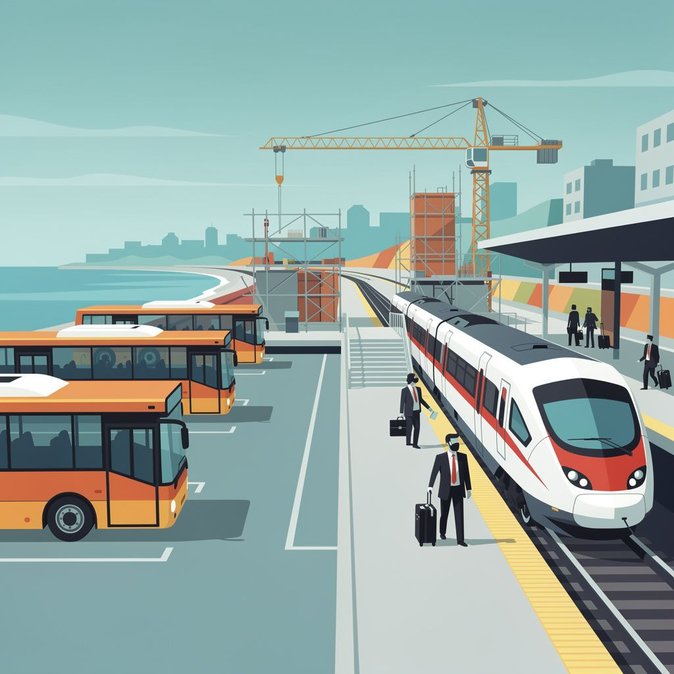
Passenger trains rolled back into A Coruña’s provisional station at 13:49 CEST on 11 July, ending a two-week suspension required to connect the rail hub with the city’s future bus-and-train intermodal complex. During the closure, Renfe moved more than 100,000 passengers by 1,850 coaches and 285 taxis on substitute road services linking A Coruña with Santiago, Betanzos and other Galician cities. Adif, Spain’s rail-infrastructure manager, now enters the next phase of construction on the A Coruña–Uxes line, which will limit speeds and tweak timetables on ten medium- and long-distance services. An unrelated signalling failure between Ordes and Santiago caused 20-minute delays on reopening day, underscoring the fragility of the network during works. For mobility planners the resumption matters because A Coruña is the departure point for overnight services to Madrid and the gateway for multinational firms with plants in Arteixo and the port’s outer harbour. The intermodal project—first designed in 2001—promises seamless transfers between high-speed rail, regional trains and long-distance coaches once completed at year-end. Companies with commuter fleets should note that parking around the station remains restricted until December, while taxi ranks have been temporarily relocated. Renfe’s corporate portal already shows revised departure times; travel-management systems that rely on static schedules need to update feeds to avoid mis-ticketing. In the medium term, integrated ticketing across rail and bus will be introduced, allowing single-P&R invoices—good news for expense teams juggling multimodal employee journeys in northern Spain.
Source: Cadena SER