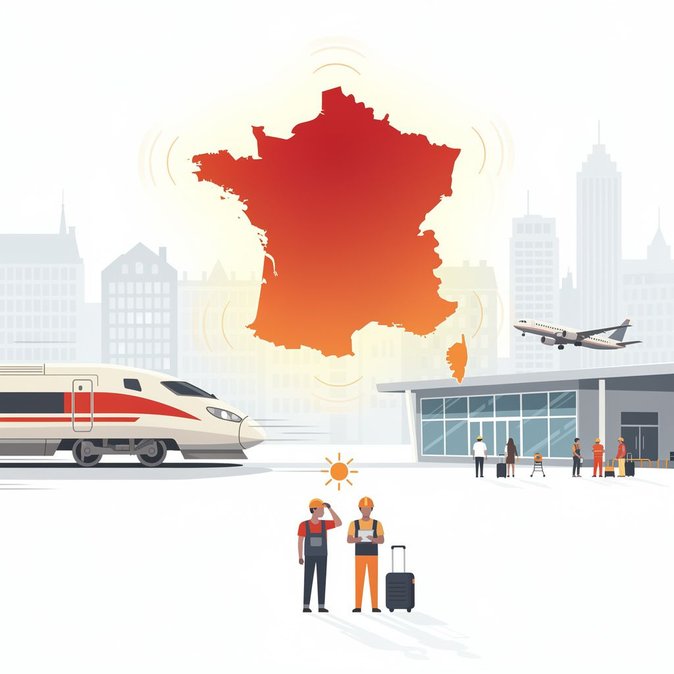
France’s inter-ministerial crisis cell triggered the ‘Plan Orsec Chaleurs Extrêmes’ late Friday, 10 July, placing all 24 departments under red-level heat alert on a special civil-protection footing for at least 72 hours. The decision comes at the start of the Bastille-Day long weekend, traditionally one of the heaviest travel periods of the summer.
If the heatwave forces any last-minute itinerary changes or documentation issues, travellers can lean on VisaHQ’s dedicated France portal to expedite visas, passport renewals, and other consular paperwork entirely online or through its Paris office, saving valuable time during a stressful period:
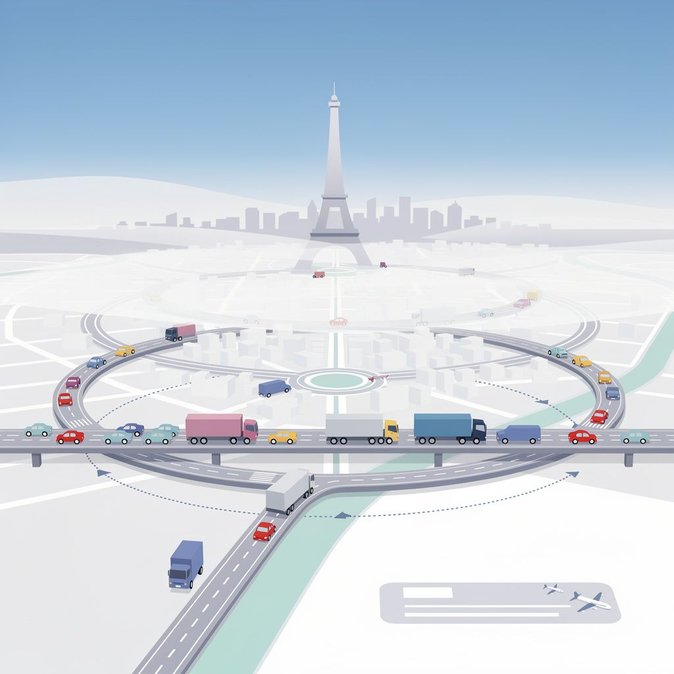
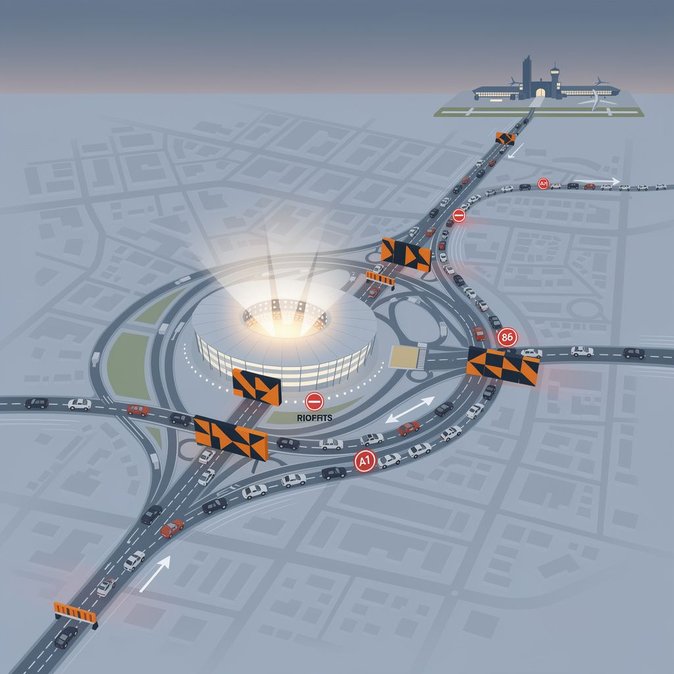
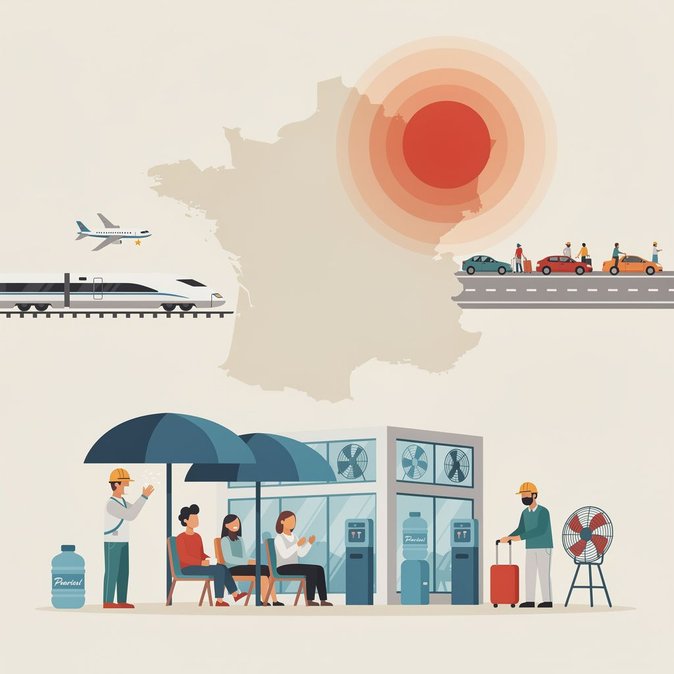
Transport Minister Philippe Tabarot said on social network X that “our priority is to allow everyone to leave or return in the best conditions despite this new heatwave,” noting that nearly 1.9 million rail passengers are expected between Friday and Monday. Under the Orsec protocol, prefects can requisition air-conditioned public buildings as cooling centres, restrict outdoor events, and mobilise extra emergency-medical and firefighting staff. Direction Générale de l’Aviation Civile (DGAC) instructed airports to prepare for potential runway-surface temperature issues and recommended airlines consider weight-and-balance adjustments at peak heat hours. Paris-Charles-de-Gaulle and Orly have pre-positioned water-misting arches and shaded queueing areas at border-control posts. The Ministry of the Interior asked prefectures to review contingency traffic-management plans along motorway corridors A6, A7 and A10, where vehicle breakdowns in previous heatwaves created kilometre-long queues. Road-operator Vinci Autoroutes will deploy extra patrols carrying bottled water and mobile shade tents. Long-distance coach companies such as BlaBlaCar Bus have been authorised to allow passengers to board earlier to keep coaches running air-conditioning during layovers. Corporate mobility managers are being urged to review duty-of-care policies over the weekend. SNCF and major airlines will accept no-fee changes for travellers in the red-alert zone until 15 July. Companies with posted workers on construction or agricultural sites must adapt working hours and guarantee cool-down breaks, following a joint Labour-Transport Ministry circular issued overnight. For international assignees and tourists, the government advises carrying photo ID and proof of accommodation to speed checks at temporary mobile hydration stations being set up in railway concourses. Travellers from non-EU countries should allow additional time at automated Entry/Exit System (EES) kiosks, where queues may lengthen as biometric sensors are slowed to avoid overheating, according to eu-LISA’s French interface team.
If the heatwave forces any last-minute itinerary changes or documentation issues, travellers can lean on VisaHQ’s dedicated France portal to expedite visas, passport renewals, and other consular paperwork entirely online or through its Paris office, saving valuable time during a stressful period:
Transport Minister Philippe Tabarot said on social network X that “our priority is to allow everyone to leave or return in the best conditions despite this new heatwave,” noting that nearly 1.9 million rail passengers are expected between Friday and Monday. Under the Orsec protocol, prefects can requisition air-conditioned public buildings as cooling centres, restrict outdoor events, and mobilise extra emergency-medical and firefighting staff. Direction Générale de l’Aviation Civile (DGAC) instructed airports to prepare for potential runway-surface temperature issues and recommended airlines consider weight-and-balance adjustments at peak heat hours. Paris-Charles-de-Gaulle and Orly have pre-positioned water-misting arches and shaded queueing areas at border-control posts. The Ministry of the Interior asked prefectures to review contingency traffic-management plans along motorway corridors A6, A7 and A10, where vehicle breakdowns in previous heatwaves created kilometre-long queues. Road-operator Vinci Autoroutes will deploy extra patrols carrying bottled water and mobile shade tents. Long-distance coach companies such as BlaBlaCar Bus have been authorised to allow passengers to board earlier to keep coaches running air-conditioning during layovers. Corporate mobility managers are being urged to review duty-of-care policies over the weekend. SNCF and major airlines will accept no-fee changes for travellers in the red-alert zone until 15 July. Companies with posted workers on construction or agricultural sites must adapt working hours and guarantee cool-down breaks, following a joint Labour-Transport Ministry circular issued overnight. For international assignees and tourists, the government advises carrying photo ID and proof of accommodation to speed checks at temporary mobile hydration stations being set up in railway concourses. Travellers from non-EU countries should allow additional time at automated Entry/Exit System (EES) kiosks, where queues may lengthen as biometric sensors are slowed to avoid overheating, according to eu-LISA’s French interface team.