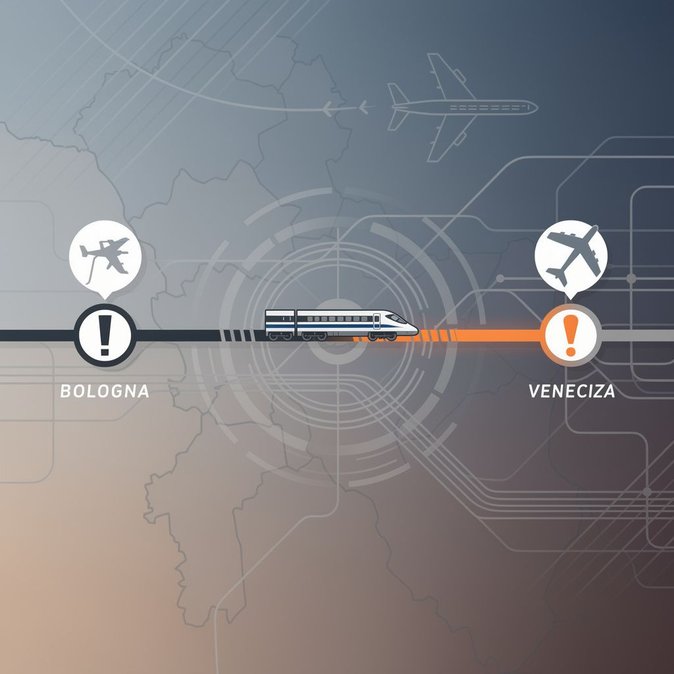
Rail network operator Rete Ferroviaria Italiana (RFI) confirmed at 20:00 on 11 July that traffic on the Bologna–Venezia line had returned to normal after technicians resolved an overhead-line failure near Monselice. The disruption, which began shortly after 17:00, forced Trenitalia and Italo to divert or cancel at least 18 high-speed and InterCity services linking northern business hubs with Rome and the Adriatic coast. Passengers already facing airport strikes turned to rail as an alternative; the unexpected outage therefore compounded mobility headaches for corporate travellers. RFI activated its contingency plan, routing some trains via Padua and Rovigo while deploying diesel rescue locomotives to clear stalled sets. Normal timetables resumed in the late evening, limiting knock-on delays for early-morning Monday departures. The incident follows a spate of heat-related faults on electrified lines, prompting RFI to accelerate its €2.4 billion resilience programme that includes smart-sensor monitoring of catenary temperature and remote-switch diagnostics. Business-travel analysts warn that a single point of failure on Italy’s Y-shaped high-speed backbone can ripple across the wider European network, affecting connections to Munich, Zurich and Paris. Mobility managers are urged to build real-time rail alerts into traveller-tracking platforms and to brief employees on compensation rights under EU rail passenger regulation 2021/782, which grants 25 % to 50 % refunds for delays exceeding one hour.
Source: RFI – Infomobilità