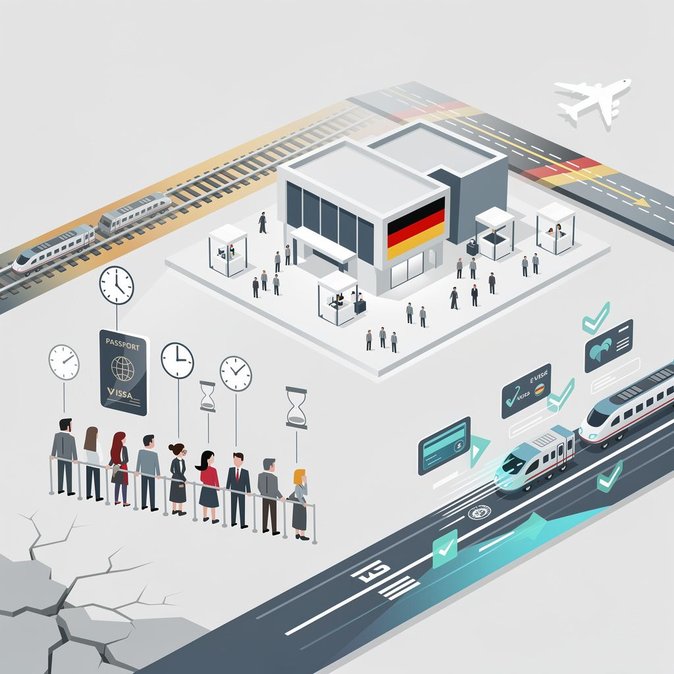
On 14 July the Association of the German Trade-Fair Industry (AUMA) released its ‘Trends 2026/27’ outlook, arguing that Germany’s world-leading exhibition sector must tackle three vulnerabilities: cumbersome visa processes for exhibitors and visitors, ageing transport infrastructure, and domestic regulatory red tape. Although Germany hosts two-thirds of the globe’s top industry fairs, AUMA fears that emerging hubs in the Gulf and Southeast Asia are luring international exhibitors with 48-hour e-visas and purpose-built venues. AUMA chief executive Jörn Holtmeier said that maintaining Germany’s “unique internationality” hinges on modernising Schengen visa workflows. He called on the Federal Foreign Office to expand outsourced visa centres in growth markets and to pilot a fully digital business-visitor visa by 2027, echoing EU plans for a bloc-wide e-visa. The report also highlights pressure on Deutsche Bahn’s long-distance network and urban public transport that serve mega-fairs in Hanover, Frankfurt and Düsseldorf. Delays, it says, deter foreign exhibitors who must install stands overnight. AUMA proposes a federally co-funded ‘expo rail shuttle’ programme and fast-track airport station upgrades. For companies relying on trade-fair lead generation, the stakes are high. Messe Frankfurt estimates that each lost non-EU exhibitor costs local suppliers €65,000 in ancillary spend on logistics, stand-building and hospitality. HR and mobility managers should therefore monitor visa-appointment lead times in source markets such as India and Türkiye and flag issues to AUMA’s new online tracker. The study ends on an upbeat note: German fairs still benefit from political neutrality and strong cluster ecosystems—advantages that can be reinforced if Berlin streamlines short-stay visa issuance and invests in digital badges that double as border-control pre-clearance tokens.
Source: Business-Travel.de