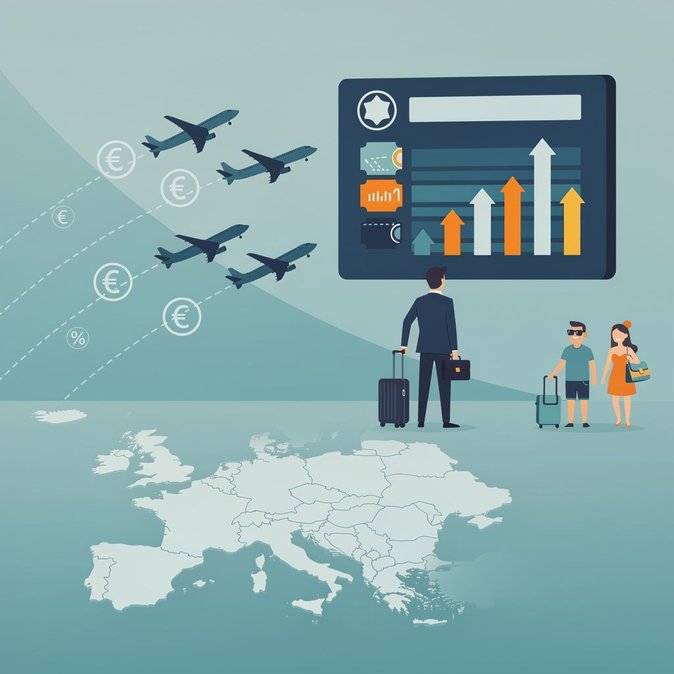
Business-travellers will need fatter budgets this summer. The Federal Statistical Office (Destatis) reported on 13 July that economy-class tickets from German airports to foreign destinations cost on average 8.5 % more between January and June 2026 than in the same period of 2025. Within Europe the jump was even steeper at 11.5 %, driven by capacity constraints on Mediterranean leisure routes that also attract corporate demand in peak season. Mittel- and long-haul markets show a mixed picture: fares to Central America surged 12.5 %, Asia-Pacific 4.9 %, while prices to North America rose a comparatively modest 3.7 %. Flights to Africa bucked the trend, falling 12 % as Gulf carriers added seats via their European fifth-freedom services. Domestic German flights, though increasingly a political target for climate campaigners, also went up 9.5 % amid the phased withdrawal of the air-rail combined tax rebate. Destatis uses the consumer-price index basket, so the figures reflect final prices paid, including ancillaries and fuel surcharges. Analysts cite higher wages under new collective agreements at Lufthansa and Eurowings, a still-elevated kerosene price and air-traffic-control staff shortages as structural cost drivers. Corporate travel managers should revisit 2026 policy caps, as many German companies set airfare ceilings once a year. Negotiated discounts may not fully absorb double-digit spot-price hikes on secondary European city-pairs. Experts recommend redirecting volume to joint ventures such as Lufthansa–United–Air Canada on transatlantic routes where competition keeps prices comparatively stable, and shifting non-essential intra-EU trips to rail to tap into the government’s 50 % rail-travel tax deduction. Higher fares also feed into the expatriate cost-of-living index used to calculate assignment allowances. HR should ensure mobility packages reflect the new benchmark, especially for families needing multiple home-leave flights.
Source: Statistisches Bundesamt