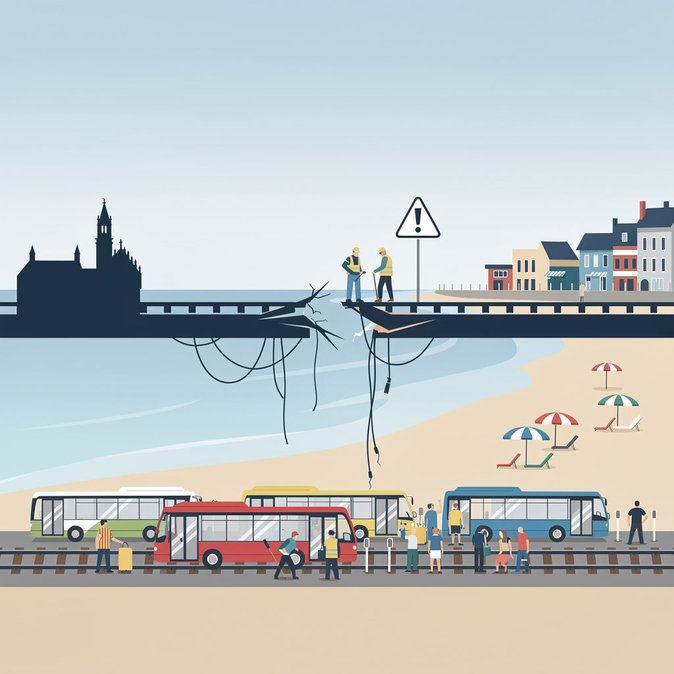
Early on 14 July, thieves cut and removed signalling cables near Ostend station, prompting infrastructure manager Infrabel to suspend all train services between Bruges and Ostend in both directions. National operator SNCB/NMBS deployed replacement buses and advised passengers to use De Lijn coastal trams until repairs were completed shortly after midday. The incident occurred at the height of Belgium’s seaside holiday season and affected hundreds of commuters and day-trippers heading to the coast. It is the latest in a series of copper and signalling-cable thefts that have plagued the Belgian rail network in 2026, costing the sector an estimated €6 million in delays and repairs. For employers with staff travelling between Brussels and West Flanders, the disruption underscores the importance of multimodal contingency plans. Companies running summer off-sites in coastal resorts should brief attendees on alternative routes via Ghent or Kortrijk or consider chartering coaches during peak season. Infrabel and SNCB are accelerating the rollout of fibre-optic replacements and smart-sensor technology to detect cable tampering in real time. However, industry associations warn that rail-related theft remains attractive to organised gangs as long as scrap-metal prices stay high. Business-travel policies may need to incorporate higher buffer times and flexible tickets for journeys to coastal meetings and logistics hubs like Zeebrugge. Although normal rail service resumed by early afternoon, insurers say the cumulative impact of repeated incidents could drive up premiums for just-in-time cargo moved by rail to and from the Port of Ostend and Zeebrugge.
Source: The Brussels Times