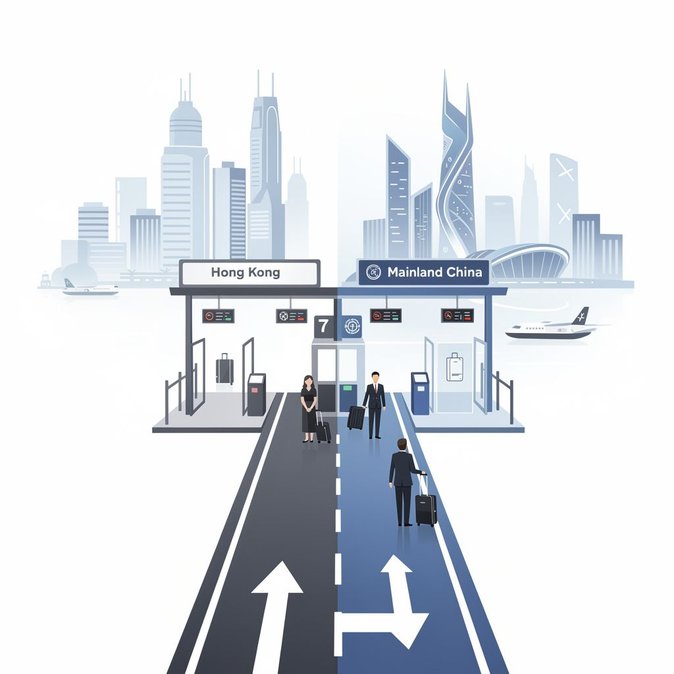
Hong Kong lawmakers have been asked to treat the Huanggang Port Hong Kong Port Area Bill as urgent business after the government confirmed the rebuilt checkpoint will be commissioned on 31 July. Secretary for Security Chris Tang told reporters on 15 July that the measure gives Hong Kong legal jurisdiction inside the new clearance zone on the Shenzhen border and must therefore be enacted before the end-of-month launch. The legislation underpins a full "co-location" arrangement, meaning Hong Kong and mainland officers will operate side-by-side in a single hall. Travellers will present documents once and walk straight into Shenzhen, replicating the model already used at the West Kowloon high-speed-rail terminus and the Hong Kong-Zhuhai-Macao Bridge. Officials say the design will cut average clearance time from 45 minutes to under 15 and support the forecast rebound in cross-border commuters and business trips. In practical terms, the Immigration Department must finish installing biometric e-channels, baggage-scan lanes and data links to Shenzhen’s National Immigration Administration within two weeks. Stress-tests and staff drills are scheduled for 24-28 July to ensure systems can process the projected 200,000 daily passengers when schools reopen in late August. For employers managing Guangdong-based staff or same-day business runs, the upgrade could slash travel costs. Relocation advisers also expect a surge in dual-location expatriate assignments because the faster crossing makes it feasible to live in Hong Kong while working in Shenzhen’s tech parks. Companies should review mobility policies—especially housing and per-diem budgets—to capture the time savings. Longer-term, the Huanggang revamp is a pilot for the SAR’s plan to consolidate seven land checkpoints into three next-generation hubs by 2030. Authorities hinted that lessons learned here will shape future tenders, including possible facial-recognition clearance for frequent travellers and cargo-passenger integration.
Source: South China Morning Post