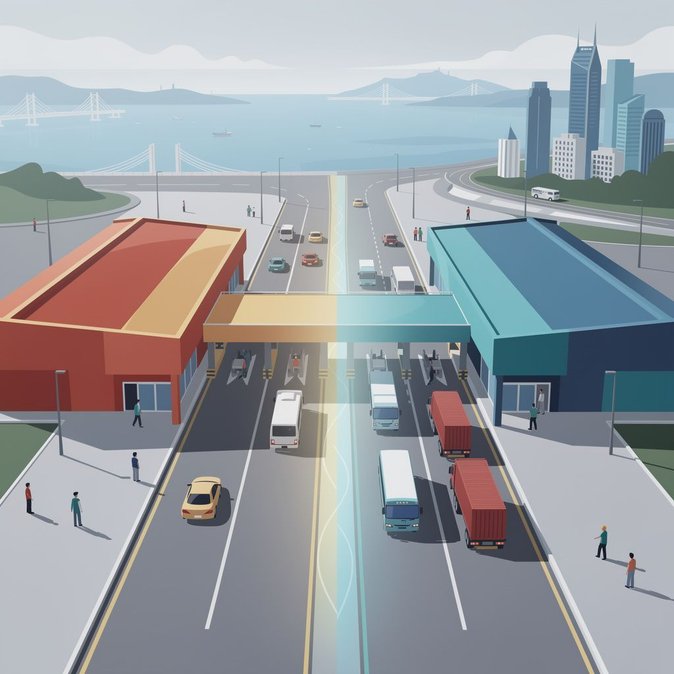
Hong Kong’s Legislative Council is racing against the clock to complete the passage of the Huanggang Port Hong Kong Port Area Bill, the legal framework that will allow joint Mainland-Hong Kong immigration and customs clearance in a single building at the rebuilt Huanggang (Lok Ma Chau) land-border crossing. At a special House Committee session on Thursday, 16 July, lawmakers wrapped up four hours of clause-by-clause scrutiny and scheduled the bill’s second and third readings for an extraordinary council meeting on Friday. Secretary for Security Chris Tang told legislators that the new facility will open in “one go”, rejecting calls for a phased launch. All personnel and equipment currently operating from temporary inspection halls must be transferred simultaneously, he said, because emergency drills, stress tests and cross-boundary transport rehearsals cannot begin until the legislation takes effect. The State Council has already authorised Hong Kong to exercise jurisdiction over the 18-hectare Hong Kong Port Area beginning 31 July. Shenzhen authorities have installed 134 automatic “co-operation inspection” channels and 68 manned counters designed to cut average clearance time from 30 minutes to about five. Daily capacity will rise from the current 110,000 to 200,000 passengers, with room to scale to 300,000 once the MTR’s Northern Link spur line opens. For global mobility managers the stakes are high. Huanggang/Lok Ma Chau is traditionally the only 24-hour passenger land crossing in the Greater Bay Area and a critical artery for late-night cargo drivers, cross-border coaches and business travellers hopping between the two financial hubs. The new “co-location, single-inspection” model—already in use at the Hong Kong-Zhuhai-Macao Bridge and the West Kowloon high-speed-rail terminus—means travellers will present their documents only once, dramatically improving predictability for just-in-time supply chains and same-day executive visits. Corporations with exposure to the GBA—home to 86 million people and a US$2 trillion economy—should review shuttle schedules, staff shuttle passes and contingency plans for the last week of July. Once operational, the port will support e-channel enrolment for eligible foreigners, and Shenzhen plans to pilot “facial-and-iris” biometric vehicle gates that could later be replicated at other land crossings.
Source: RTHK
How VisaHQ can help
VisaHQ simplifies the visa application process for individuals and businesses. Check current travel requirements, prepare the required documents and manage your application online through the VisaHQ China portal.More From China
View all
Cathay Pacific to make Madrid daily and plugs Hong Kong into four new Latin American cities via Iberia codeshare
China Eastern inaugurates Beijing Daxing–Bali nonstop, opening first direct link from the capital to Indonesia’s top resort island