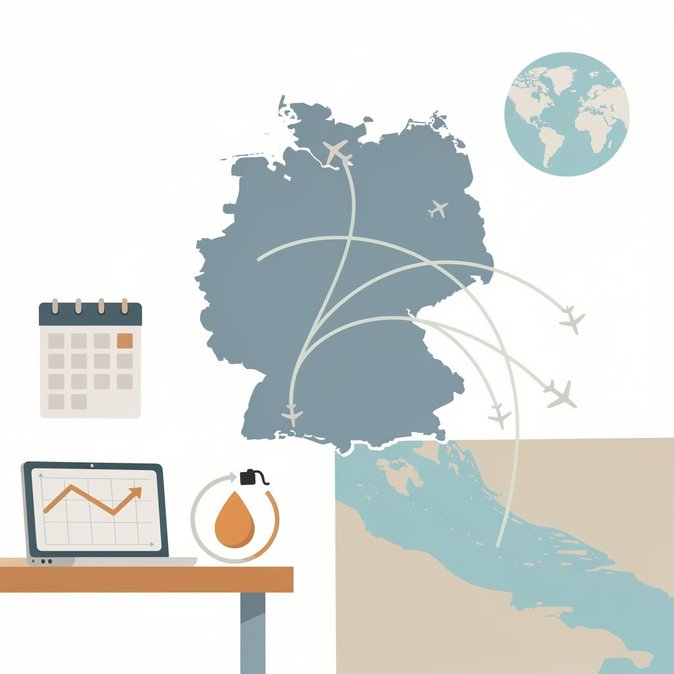
Germany and Algeria deepened their long-standing relationship on 16 July 2026 by signing a Joint Declaration on a Strategic Agenda that stretches from energy to education – and, crucially for global-mobility managers, to migration governance. The declaration, adopted during President Abdelmadjid Tebboune’s state visit to Berlin, establishes a standing high-level dialogue on “regional security, migration and returns.” Both governments committed to regular consultations between their interior ministries and to expand cooperation under the existing German-Algerian Protocol on Identification and Readmission. In practical terms, this will allow German authorities to accelerate the verification of Algerian nationals who have no legal right to remain and to streamline charter-return operations, while Algiers receives technical assistance for reintegration programmes. For employers, the pact matters in two ways. First, faster readmission procedures free up Federal Police capacity that can instead be redeployed to clear residence-permit backlogs and airport queues during the busy summer season. Second, the agreement encourages “legal pathways” for mobility: academic exchange, vocational training and hydrogen-sector secondments are singled out for expansion. HR teams may therefore gain access to new Algerian talent pools, especially in engineering and green-energy occupations where Germany faces acute shortages. Background: Germany introduced an accelerated Skilled-Immigration Act in 2024 but remains dependent on bilateral deals to move workers from non-EU markets. Algeria, for its part, has been eager to upgrade labour-market cooperation to curb irregular outflows and leverage its youthful workforce. By embedding mobility in a broader strategic partnership that also covers renewable-energy projects such as the Southern Hydrogen Corridor, both capitals hope to create a politically balanced framework that combines enforcement with opportunity. Practical advice: multinational employers should watch for implementing regulations – notably any fast-track visa quotas or trainee programmes – that the Interior and Labour Ministries are expected to publish by autumn. Travel-risk teams should also note that stepped-up joint operations could lead to short-notice identity checks on flights between Germany and Algeria. Finally, relocation providers with operations in North Africa may find new business in return-and-reintegration services financed by German development funds.
Source: Federal Government Press Office