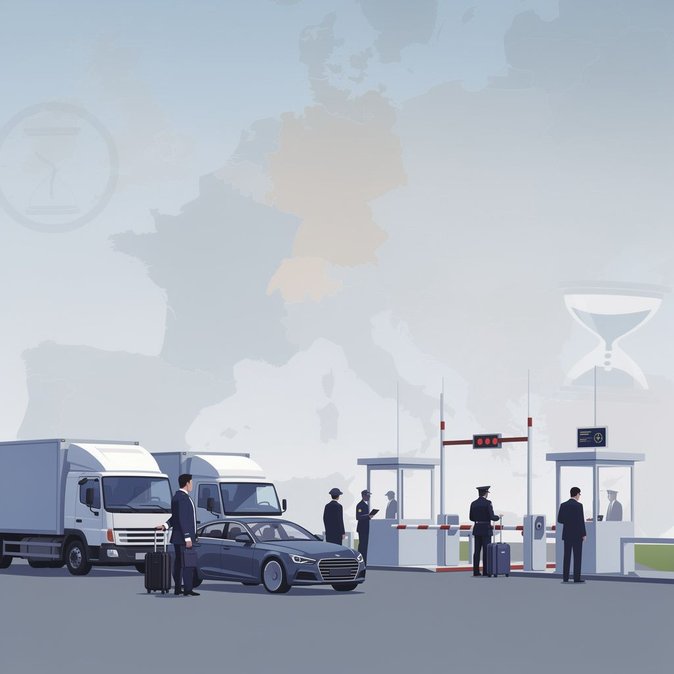
The European Commission intensified pressure this week for Germany to roll back the internal Schengen-border controls it first reintroduced during the 2015 refugee crisis. In Brussels, Migration Commissioner Magnus Brunner stressed that irregular arrivals have fallen sharply since the new Common European Asylum System (CEAS) entered into force on 12 June 2026 and argued that “exceptional measures must give way to normal Schengen travel.” Yet after talks in Berlin on 16 July, German Interior Minister Alexander Dobrindt and his Austrian counterpart Gerhard Karner said the controls – currently authorised until 15 September – would stay. Federal Police data show 3,300 unauthorised entries in June, down 21 % month-on-month but still “unacceptably high,” Dobrindt said. He also pointed to several German court rulings that deemed specific push-back practices unlawful, arguing that tighter procedures at legal crossings are therefore indispensable. Industry reaction has been swift. The German Tourism Association warned that continued checks during the peak holiday season will strain cross-border day-trip traffic and could trim summer revenues in Bavaria and Saxony by “low three-digit millions.” Logistics groups are equally concerned about wait times for high-value just-in-time shipments. Police unions counter that resources are already stretched: makeshift checkpoints on secondary roads lack shade and digital infrastructure. Officers are pressing the Interior Ministry for mobile biometric kits and AI-supported licence-plate scanners to speed routine verifications and avoid kilometre-long tailbacks. For corporate travel managers the message is clear: allow extra time when routing staff through road or rail crossings from Austria, Poland, the Czech Republic or Switzerland into Germany, especially on Fridays and Sundays. Although Schengen rules demand randomised rather than permanent checks, in practice many crossings operate 24/7 spot controls. EU officials will reassess Germany’s next extension request in early September – but with national elections looming in three states, a quick end to the controls looks unlikely.
Source: GermanPolicy.com