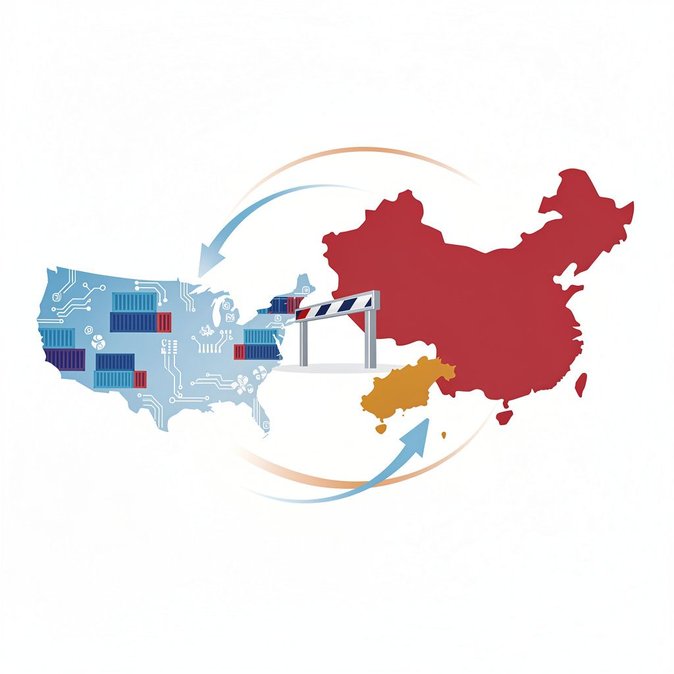
The Hong Kong Special Administrative Region (HKSAR) Government on Friday welcomed Washington’s decision not to renew the national emergency order that since 2020 had revoked the city’s special treatment under US law. The White House allowed the executive order to expire at midnight Eastern Time, and the US Treasury’s Office of Foreign Assets Control simultaneously delisted several Hong Kong officials from its sanctions schedule. The original order, signed in July 2020, had suspended tariff preferences and tightened export-control licensing after Beijing enacted a sweeping national security law. While the general licence never directly restricted visas, many US companies responded by downgrading regional headquarters or freezing Hong Kong staff rotations amid uncertainty over compliance risk. With the emergency now lifted, Hong Kong officials expect the US Commerce Department to restore the city’s separate customs territory status for dual-use technology exports in the coming months. That would make it easier for multinational firms to ship controlled components—particularly semiconductors, advanced batteries and biotech reagents—through Hong Kong International Airport instead of routing via Singapore or Seoul. Legal advisers caution that other US statutory sanctions, such as those under the Hong Kong Human Rights and Democracy Act, remain in force. Companies should therefore continue enhanced due-diligence screening on Hong Kong counterparties. Nevertheless, trade-facilitation consultants say business-traveller traffic between the US and Hong Kong could rebound quickly once renewed trust is reflected in internal corporate travel policies. The HKSAR Government framed the development as “an important step toward resuming normal economic and trade exchanges”. Airlines, freight forwarders and relocation firms should monitor forthcoming federal-register notices for concrete licensing-policy changes that could reopen suspended trade lanes and talent-mobility programmes.
Source: news.gov.hk / Associated Press