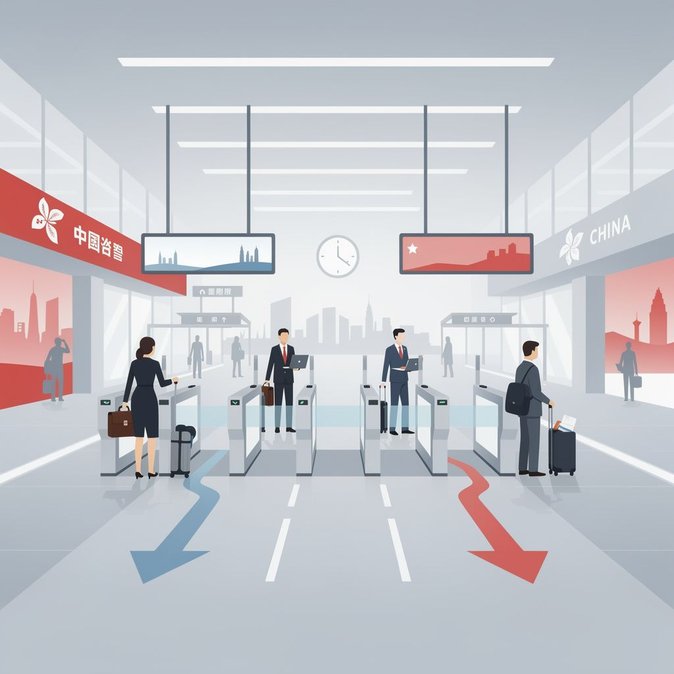
Hong Kong legislators have cleared the way for a lightning-fast passage of the Huanggang Port Hong Kong Port Area Bill, paving the legal foundation for the city’s first fully integrated border checkpoint with Shenzhen. At a special House Committee meeting on 16 July, lawmakers agreed to skip the usual bills-committee stage and reconvene on Friday for the bill’s second and third readings. Security chief Chris Tang told members the legislation must be in force before the facility’s commissioning deadline of 00:00 on 31 July, when Hong Kong will assume jurisdiction over its designated zone inside the new complex. The redeveloped Huanggang Port adopts a “collaborative inspection and joint clearance” model—better known locally as “co-location”—so travellers clear both Hong Kong and mainland formalities in a single hall. That eliminates the need for shuttle buses across the Shenzhen River, cutting average clearance time from 45 minutes to under five. The arrangement mirrors the set-up at the West Kowloon high-speed-rail terminus and Hong Kong–Zhuhai–Macao Bridge, but will handle far larger daily volumes: up to 300,000 passenger movements and 30,000 vehicles, according to transport planners. From a global-mobility perspective, the new port is a potential game-changer for cross-border commuters, logistics firms and multinational companies with operations on both sides of the Greater Bay Area. Faster clearance reduces supply-chain friction and makes same-day business trips more attractive—critical as corporates rebalance mainland-Hong Kong staffing after years of pandemic disruption. Human-resources teams should update assignment policies to reflect the new port code “HGP” that will appear on travel records and ensure assignees’ China visas list Huanggang as an authorised entry point. The legislative sprint also underlines how Hong Kong’s post-2021 unicameral Legco can accelerate infrastructure-related bills when deadlines loom. While critics warn of diminished scrutiny, businesses have welcomed the certainty. “Every day of delay past July means lost peak-summer traffic,” a logistics executive told the Post. The Immigration Department says system testing will begin immediately once the bill is gazetted, followed by full-scale drills with Shenzhen counterparts. Practical tip: companies planning bulk staff movements in early August should pre-register vehicles and e-Channel biometrics now. Early adopters are likely to enjoy markedly shorter queues during the first month of operation, before leisure traffic picks up.
Source: South China Morning Post