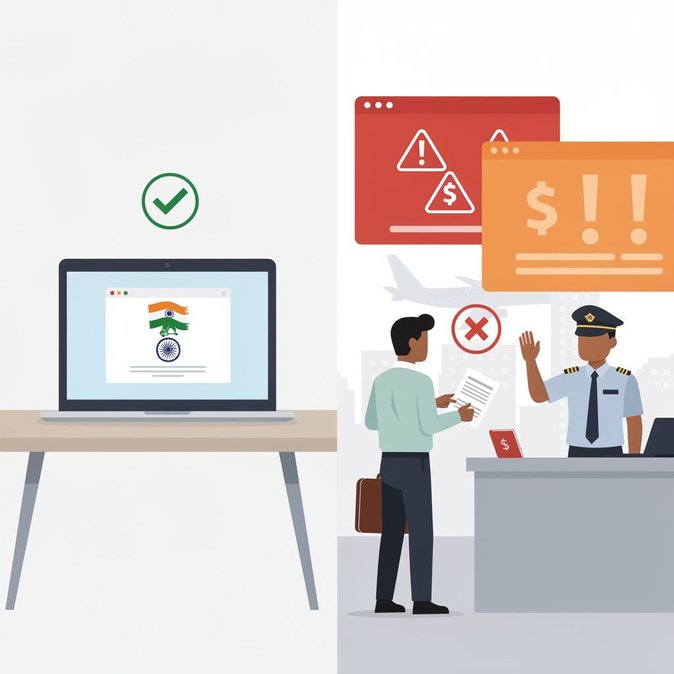
The Consulate General of India in São Paulo updated its website on 20 July 2026 with an urgent advisory listing three fraudulent portals—e-touristvisaindia.com, indianvisaonline.org.in and e-visaindia.com—that mimic India’s official e-Visa interface. The fake sites charge inflated fees, harvest passport data and, in several cases, issue PDFs that are rejected at Indian airports, leaving tourists stranded or forced to buy an on-arrival visa. Brazil has become a fast-growing source market for Indian medical tourism and higher education; nearly 18,000 e-Tourist visas were issued to Brazilian nationals in FY 2025-26. Scammers have capitalised on the surge by purchasing Google ads that appear above the legitimate indianvisaonline.gov.in search result. Victims report paying up to US $170 versus the official US $80 fee, only to discover their visa reference numbers are invalid. The Consulate’s advisory instructs travellers to use only the government URL and warns that Indian immigration officers cannot “regularise” or refund applications filed through unauthorised platforms. Airlines have been asked to display the correct link during check-in announcements for India-bound flights originating in São Paulo and Rio de Janeiro. Travel-management companies (TMCs) and corporates sending Brazilian staff to India for training or conferences should update their booking FAQ sheets immediately, whitelist the genuine domain on corporate browsers and block the rogue sites at firewall level. Mobility teams are also advised to arrange pre-departure visa checks to prevent denied boarding or deportations on arrival. The episode spotlights the broader challenge of visa-fraud websites worldwide. MEA officials say a centralised takedown unit within CERT-IN is working with ICANN and domain registrars to suspend look-alike domains, but concede that new clones keep popping up, making constant traveller education essential.