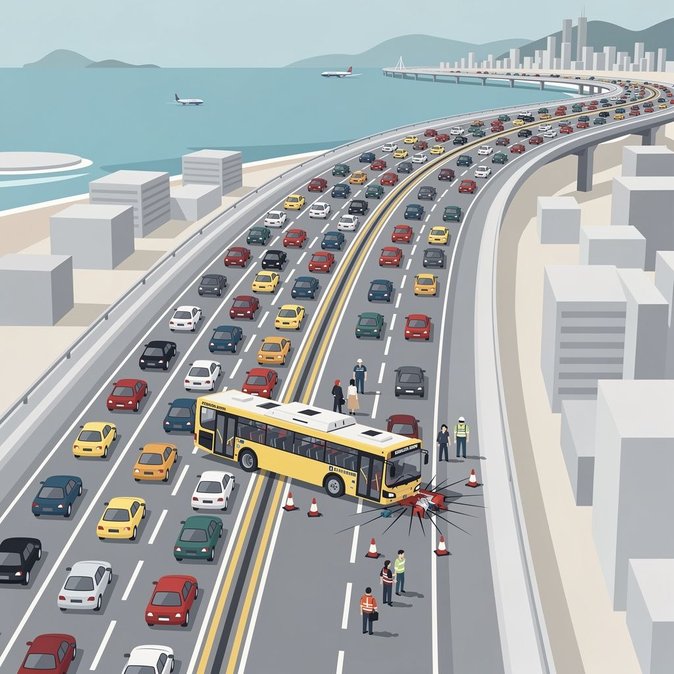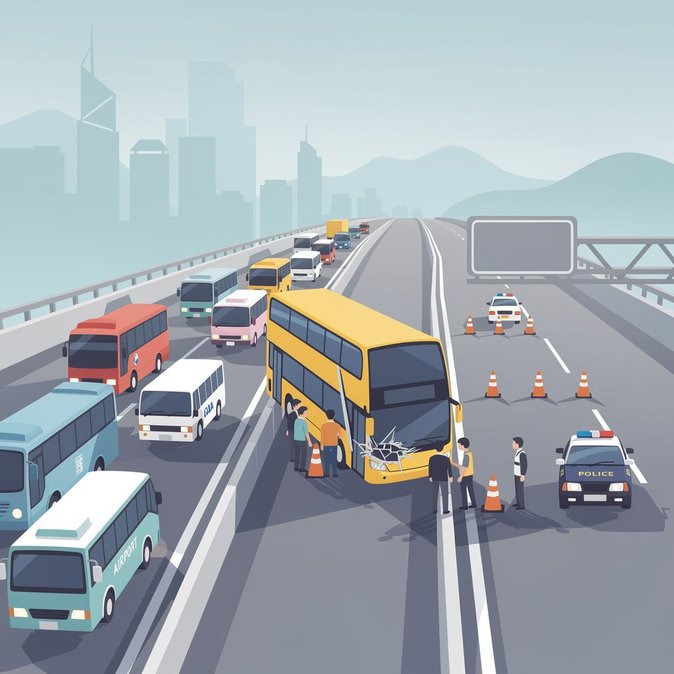
Hong Kong commuters faced traffic disruption on July 21 after a Kowloon-bound Citybus ploughed into a roadside barrier on Tuen Mun Road near Sham Tseng at around 9 a.m. Ten passengers suffered cuts and bruises from shattered glass but remained conscious. The Transport Department closed several lanes of the west-to-east dual-carriageway—one of only two road links between the north-western New Territories and the urban core—while emergency crews cleared debris. The incident occurred during the morning peak, forcing franchised buses and cross-boundary coaches to divert via Castle Peak Road and congesting alternative routes to the airport and Hong Kong-Zhuhai-Macao Bridge. Logistics operators reported delays of up to 45 minutes for container trucks heading to Kwai Tsing terminals. Citybus has suspended the driver pending an internal investigation and pledged full cooperation with police. Initial reports suggest the vehicle may have aquaplaned on a wet surface left by overnight showers, raising fresh questions about tyre-maintenance standards across Hong Kong’s 6,000-strong franchised bus fleet. For multinational employers with facilities in Tuen Mun, Tsuen Wan and the Airport Island, the crash highlights the fragility of overland connectivity when a single carriageway is blocked. Firms are re-examining business-continuity plans, including staggered shifts and remote-work options, especially during the summer wet-season when road accidents spike by almost 20 per cent. The Transport Department reopened all lanes by early afternoon, but mobility experts say recurring incidents on Tuen Mun Road underscore the need for faster progress on the long-planned Route 11 western bypass, which would add capacity and provide redundancy for cross-district traffic.
Source: RTHK