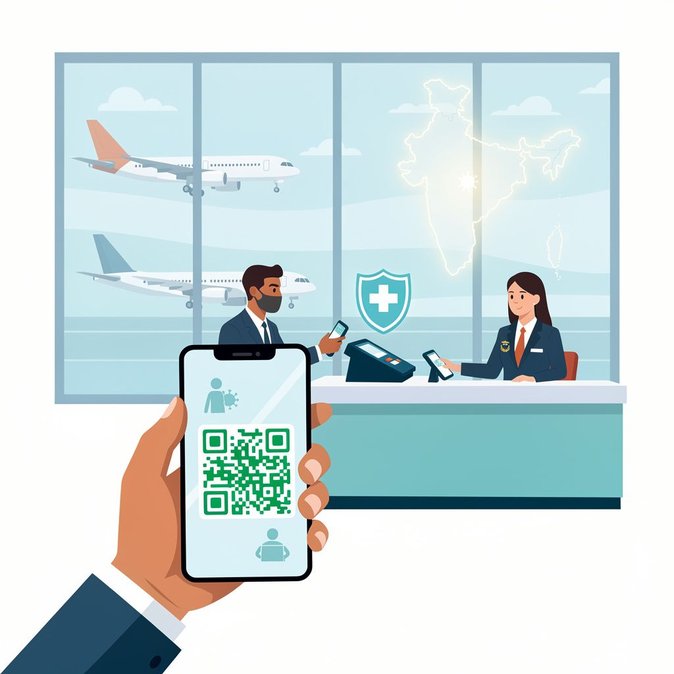
On 20 July India quietly replaced its pandemic-era Air Suvidha portal with version 2.0, extending its scope beyond Covid-19 to cover Ebola and other emerging diseases. A public advisory circulated by several Indian High Commissions on 21 July confirms that every international passenger—regardless of nationality or vaccination status—must complete the digital Self-Declaration Form (SDF) no more than 24 hours before arrival. The form captures passport details, seat number, recent travel history, possible exposure to infectious diseases and an undertaking to comply with public-health directives. After submission the system generates a QR code that travellers must present at the Airport Health Desk and again at immigration. Airlines are required to deny boarding to passengers who cannot show the QR confirmation at check-in. Unlike its predecessor, Air Suvidha 2.0 is integrated with the Immigration authorities’ Advance Passenger Information System (APIS), enabling real-time risk scoring. The Directorate General of Health Services has positioned medical teams at 30 international airports to pull aside any passenger flagged as high risk for secondary screening or quarantine orders. For mobility managers the change means updating arrival protocols, pre-trip emails and duty-of-care checklists. Travellers should fill out the form during online check-in, keep a screenshot of the QR code and expect health checks that can add up to 45 minutes at busy airports. Failure to comply can lead to denied entry and fines under India’s Epidemic Diseases Act. The move aligns with India’s commitment under the WHO International Health Regulations to maintain digital contact-tracing capacity for future outbreaks, and positions the country to pivot rapidly should new pathogens arise.