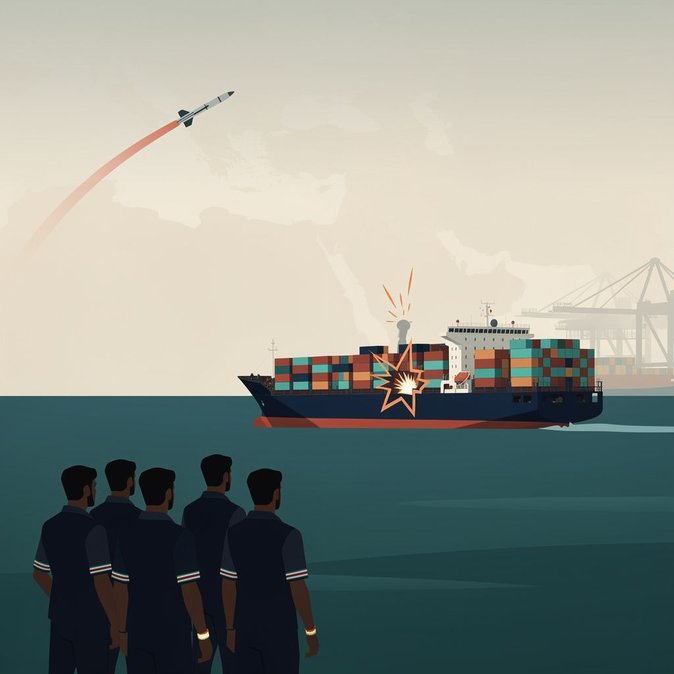
The Ministry of External Affairs (MEA) called in Russia’s Chargé d’Affaires Vladimir Ladanov on 21 July 2026 to protest the 19 July missile strike on the Liberian-flagged MV Golden Leo in the Gulf of Oman. The attack—attributed by Western naval sources to a rogue drone operating out of Yemen—killed four Indian crew members and injured seven. India demanded that Moscow leverage its influence over regional actors to prevent further attacks on commercial shipping, noting that 17 percent of Indian seafarers’ man-days are logged on vessels transiting the Strait of Hormuz. The incident reignites corporate concerns about duty-of-care for Indian nationals on merchant ships in Middle-East conflict zones. Ship-managers Maersk and MSC have already rerouted several sailings around the Cape of Good Hope, adding 12–14 days and substantial fuel costs. Companies exporting time-sensitive goods—from pharmaceuticals to auto parts—must weigh higher freight rates against employee safety. Marine insurers have raised war-risk premiums for Indian-crewed vessels by up to 30 basis points since the attack. The Directorate General of Shipping is expected to issue a fresh circular updating Shore Leave Pass and crew-change protocols at Indian ports to ensure counselling and mental-health support for returning crew. Employers should prepare documentation for emergency evacuations and insurance claims under the Maritime Labour Convention (MLC) guidelines. Bottom line: The Golden Leo tragedy highlights escalating maritime security risks that directly affect India’s 250,000-strong seafaring workforce and the global supply chains that depend on them. Mobility and risk managers in shipping, oil & gas and project logistics need to revisit crisis-response playbooks urgently.
Source: Akashvani News